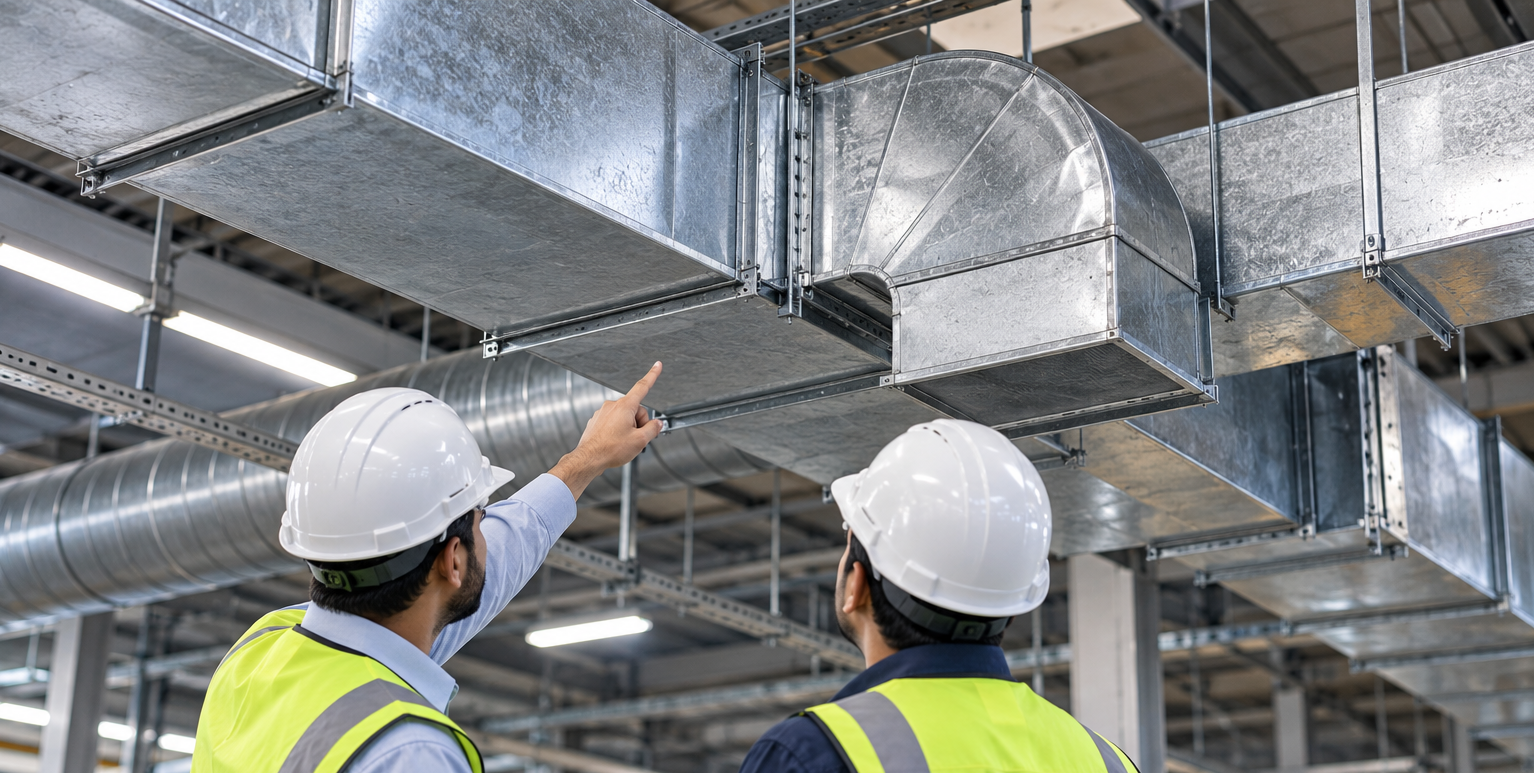
Industrial ventilation systems can operate for years, but their performance does not depend on fans alone. Ageing, damaged or poorly modified duct work can gradually reduce airflow and create problems that are sometimes incorrectly blamed on the exhaust equipment.
Facility managers in Bengaluru should know when duct inspection, repair or replacement deserves attention.
Airflow Has Noticeably Reduced
Weak extraction at a hood or grille can indicate several possible problems.
The fan may be malfunctioning, filters may be blocked or the duct network may contain restrictions.
If fan performance appears normal, inspect ducts for collapsed sections, heavy deposits, damaged dampers or poorly executed modifications.
Ducts Have Visible Corrosion
Corrosion should not be treated only as a cosmetic issue.
Progressive deterioration can weaken duct sections and eventually create leakage or structural problems.
The cause should also be investigated. Moisture, chemical exposure, outdoor weather conditions or unsuitable material selection may contribute to deterioration.
Joints Are Leaking
Air leakage reduces the amount of useful airflow reaching its intended destination.
Look for damaged seals, open joints or poorly fitted connections, especially around sections that have previously been dismantled for maintenance.
Repair may be sufficient for isolated problems. Widespread deterioration may justify more extensive replacement.
Excessive Noise Has Developed
Whistling, rattling and vibration can sometimes indicate duct-related problems.
Loose panels, inadequate supports, excessive velocity or abrupt transitions can create unwanted noise.
Because noise can have several causes, the complete system should be inspected rather than replacing individual components without diagnosis.
The Facility Layout Has Changed
Factories evolve.
Machines are relocated, production capacity increases and new equipment is added. A duct network designed for an earlier layout may no longer suit current operations.
Extending existing ducting without recalculating resistance can also reduce airflow at previously effective extraction points.
When production changes substantially, ventilation requirements should be reviewed.
Deposits Are Difficult to Remove
Certain exhaust applications carry grease, dust or particulate matter.
If deposits have accumulated extensively or inaccessible duct sections cannot be cleaned effectively, modification or replacement may become necessary.
The replacement design should improve maintenance access where possible.
Energy Consumption Appears Unnecessarily High
Restricted airflow paths can increase the effort required to move air through a system.
Although many factors influence energy consumption, heavily restricted or poorly configured ducting may contribute to inefficient operation.
Correcting unnecessary bends, unsuitable dimensions or severe restrictions can improve overall system behaviour.
Previous Modifications Have Become Complicated
Industrial duct networks are sometimes expanded repeatedly as production requirements change.
After several modifications, the system may contain multiple branches, reducers and unused sections. At that point, continuing to patch the existing arrangement may be less practical than redesigning key sections.
Get the System Assessed Before Replacing Everything
Not every ventilation problem requires complete duct replacement.
A professional assessment can determine whether cleaning, sealing, balancing, partial modification or a larger redesign is appropriate.
For industrial facilities across Bengaluru, Dsv Air System can evaluate ducting as part of the broader exhaust and ventilation arrangement.
The best time to investigate duct work is before airflow deterioration begins affecting normal operations. Visible damage, persistent leakage, difficult cleaning and major production-layout changes are strong reasons to review whether the existing network still suits the facility.