A well-designed fresh air system can improve air circulation, support exhaust performance and create a more controlled indoor environment in factories, warehouses and commercial facilities. However, installing supply fans or ducts without first understanding the building’s airflow requirements can result in uneven ventilation, unnecessary energy use or pressure imbalance.
For industrial facilities in Bengaluru, Karnataka, where production areas may contain machinery, enclosed work zones and continuous exhaust equipment, fresh-air planning should be based on actual site conditions rather than a standard equipment specification.
Understand Why Fresh Air Is Needed
The first step is identifying what the fresh-air system is expected to achieve.
Different facilities may need outside air for different reasons, including:
- Replacing air removed by exhaust systems
- Improving general indoor ventilation
- Reducing stagnant zones
- Supporting heat removal
- Supplying filtered outdoor air
- Maintaining better pressure balance
- Improving airflow across production areas
Clearly defining the purpose makes it easier to determine the required airflow and suitable equipment.
Review Existing Exhaust Capacity
Fresh-air supply should not be planned independently of the existing exhaust arrangement.
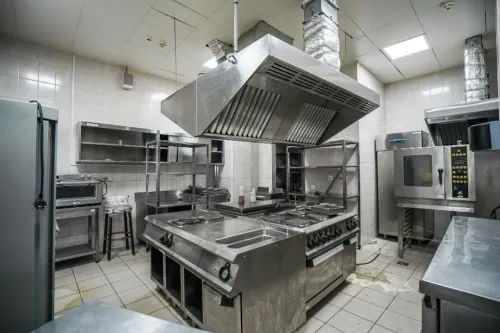
Industrial exhaust fans, centrifugal blowers and process extraction systems can remove large quantities of air from a building. If that air is not replaced effectively, excessive negative pressure may develop.
This can lead to uncontrolled air entering through doors, windows and structural gaps.
Before installing a new fresh-air system, facility managers should document:
- Existing exhaust fans
- Approximate exhaust capacities
- Operating schedules
- Process extraction points
- Areas experiencing negative pressure
- Existing natural ventilation openings
Understanding how much air leaves the building helps determine how replacement air should be introduced.
Choose the Fresh-Air Intake Location Carefully
The location of the outdoor air intake affects the quality of the air entering the facility.
Fresh-air intakes should ideally be positioned away from exhaust discharge points, smoke sources, vehicle emissions and other areas where contaminated air may be present.
This is particularly important in industrial areas of Bengaluru where neighbouring factories, loading zones and traffic can influence outdoor air conditions.
Poor intake positioning can result in contaminated exhaust air being drawn back into the building.
Decide Whether Filtration Is Required
Depending on the surrounding environment, outdoor air may contain dust and airborne particles.
A filtration arrangement can help reduce selected contaminants before outside air enters working areas.
When evaluating filters, consider:
- Required filtration efficiency
- Airflow resistance
- Replacement frequency
- Cleaning requirements
- Accessibility for maintenance
Filters should not simply be added without considering their pressure drop because excessive resistance can reduce delivered airflow.
Plan How Air Will Be Distributed
Supplying fresh air at one point does not guarantee effective ventilation throughout a large factory.
Air distribution should be planned according to the layout of machinery, workstations, heat sources and exhaust points.
Well-positioned supply outlets can help create a useful airflow path through the building.
For example, fresh air may enter from one side of a production area and move toward exhaust points located closer to heat-generating machinery.
Poor positioning can create short-circuit airflow, where supplied air is exhausted immediately without ventilating the wider space.
Check the Available Duct Route
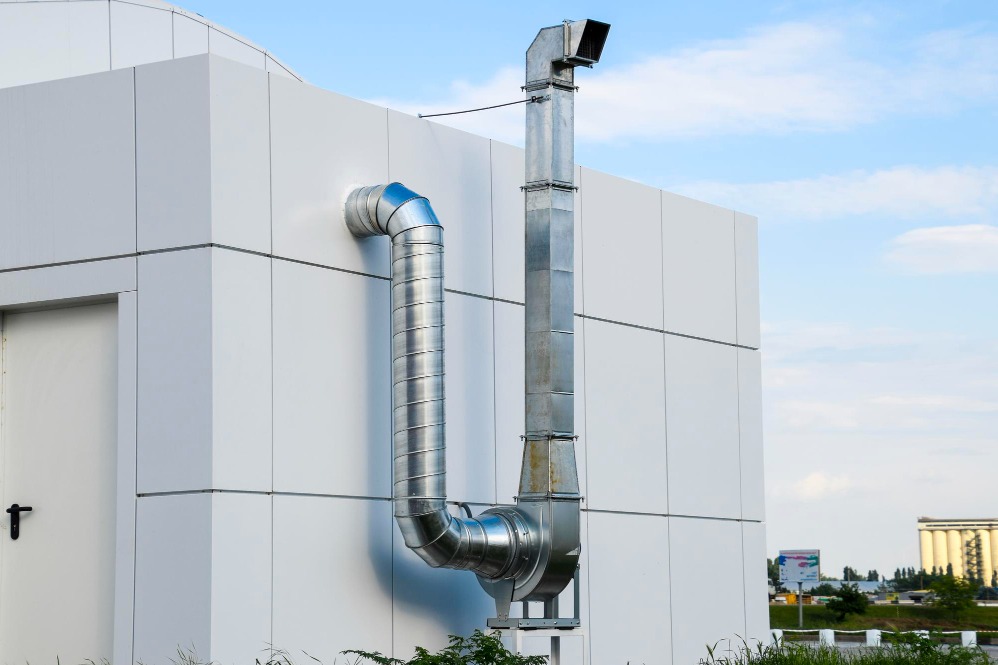
Fresh-air systems may require significant duct work.
Industrial buildings often contain structural beams, electrical cable trays, pipelines, fire systems and existing exhaust ducts. These services can restrict available routing space.
Planning duct routes before fabrication helps reduce:
- Excessive bends
- Abrupt transitions
- Long unnecessary runs
- Installation conflicts
- Difficult maintenance access
A simpler duct route generally helps reduce system resistance.
Consider Fan Capacity and Pressure
Selecting a fan only by diameter or motor rating is not enough.
The equipment must deliver the required airflow while overcoming resistance from ducts, filters, grilles, bends and other system components.
Depending on the application, an axial flow fan or centrifugal blower may be considered.
Axial equipment may suit certain higher-volume, lower-pressure applications, while centrifugal equipment can be appropriate where greater system resistance is present.
Plan for Maintenance From the Beginning
Fresh-air systems require periodic inspection if they are expected to perform consistently.
Filters can become clogged, fan components may require servicing and ducts may accumulate dust over time.
Facility managers should ensure that important components remain accessible after installation.
Maintenance planning should include:
- Filter inspection
- Fan cleaning
- Motor checks
- Duct inspection
- Damper operation
- Intake grille cleaning
Making these components accessible during initial design can simplify long-term system upkeep.
Evaluate the Complete Ventilation Arrangement
Every industrial facility has different airflow requirements. Production processes, building dimensions, machinery layout, exhaust capacity and operating hours all influence fresh-air demand.
Dsv Air System works with industrial ventilation and air-management requirements where fresh-air supply, exhaust systems and duct distribution need to function together rather than as separate installations.
Before installing a fresh air system, businesses should evaluate airflow demand, intake positioning, filtration, duct routing, fan performance and interaction with existing exhaust equipment. A coordinated approach can provide more predictable ventilation and help the system remain practical as operating conditions change.