Commercial kitchens operate under demanding conditions. Grills, fryers, ovens, tandoors and other cooking equipment can continuously generate heat, smoke, steam, odours and grease-laden vapours. Without properly planned ventilation, these emissions can spread through the kitchen and affect adjoining dining, service and storage areas.
For restaurants, hotels, cloud kitchens and institutional kitchens in Bengaluru, Karnataka, effective commercial kitchen exhaust design requires more than installing a powerful fan. The hood, duct work, blower, fresh-air supply and discharge arrangement need to function as one coordinated system.
Start With the Cooking Equipment
Ventilation requirements should be based on what is actually being cooked and the equipment being used.
A small café serving light meals may have very different extraction requirements from a restaurant operating multiple fryers, grills and high-heat cooking appliances throughout the day.
Before planning the system, review:
- Type of cooking equipment
- Equipment dimensions
- Cooking intensity
- Heat generation
- Grease production
- Kitchen operating hours
- Position of the cooking line
Understanding the cooking load provides a better foundation for determining the extraction arrangement.
Capture Smoke Before It Spreads
Effective kitchen ventilation begins at the source.
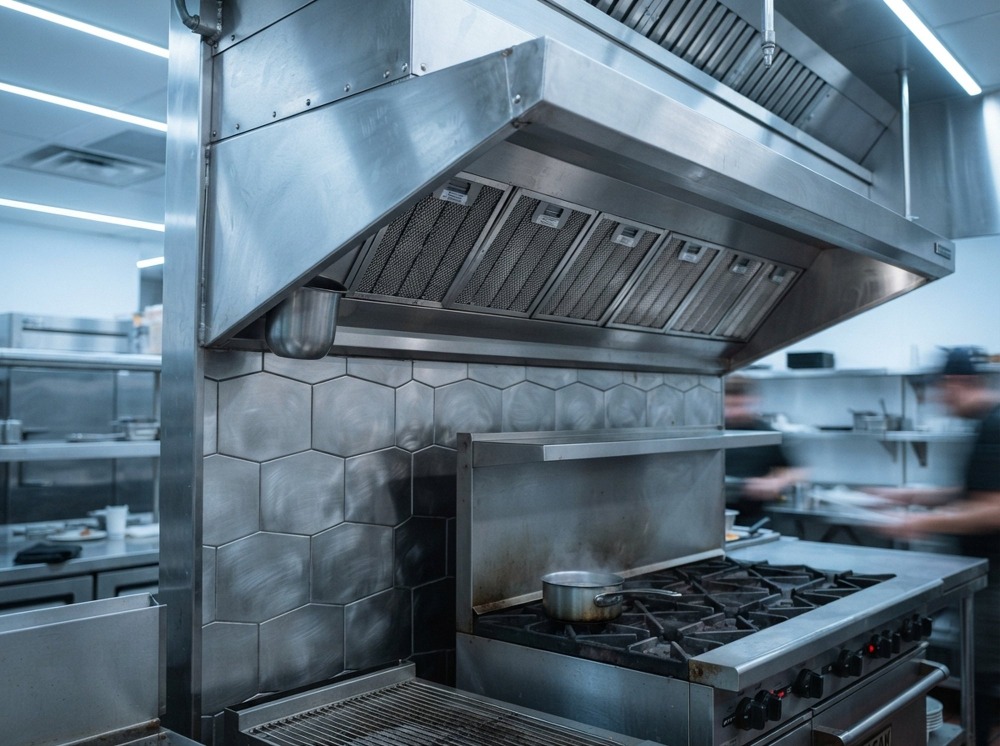
An SS hood positioned above the cooking equipment is designed to capture the rising plume of hot air, smoke, steam and grease vapour before it spreads across the kitchen.
Hood dimensions and installation position are therefore important.
If the capture area is inadequate, increasing exhaust fan capacity may not completely solve smoke-escape problems. The system should capture contaminants as close to their source as practical.
Match the Blower to System Resistance
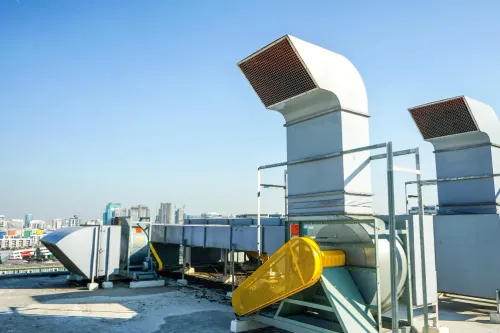
The exhaust equipment needs enough capacity to move captured air through the complete duct network.
A centrifugal blower may be considered for kitchen applications where the system includes ducting, filters, bends and other components that create resistance.
Equipment selection should consider both required airflow and static pressure.
Selecting a blower based only on motor power can produce disappointing results because two systems using similar motors may perform very differently depending on their duct configurations.
Keep Duct Work Practical
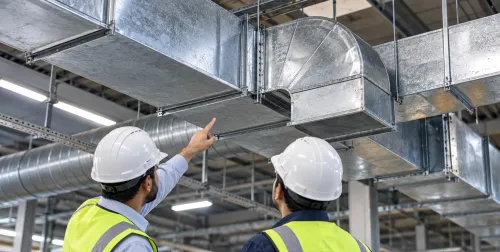
Kitchen duct work provides the route between the extraction hood and outdoor discharge point.
The route should be planned to minimise unnecessary resistance while remaining practical for installation and cleaning.
Important considerations include:
- Suitable duct dimensions
- Number of bends
- Transition design
- Joint quality
- Structural support
- Cleaning accessibility
- Material suitability
Long, complicated routes can increase pressure losses and make maintenance more difficult.
Do Not Ignore Replacement Air
A commercial kitchen can remove a substantial volume of indoor air during operating hours.
That air must be replaced.
Without adequate replacement air, the kitchen may develop excessive negative pressure. Doors may become harder to open, unwanted drafts may occur and the exhaust system may not perform as expected.
A properly planned fresh air system can introduce replacement air in a more controlled manner.
Supply-air positioning also matters. Fresh air should support useful circulation without interfering with the hood's ability to capture cooking emissions.
Plan the Final Discharge Carefully
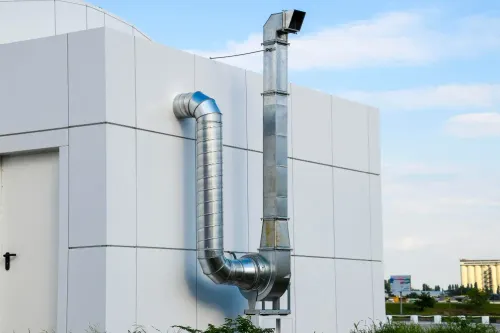
Extracted kitchen air needs to leave the building at an appropriate point.
Discharge positioned too close to windows, outdoor seating areas, fresh-air intakes or neighbouring occupied spaces may create odour and air-quality concerns.
This can be particularly relevant in Bengaluru, where restaurants often operate in commercial complexes, mixed-use buildings and densely developed areas.
The discharge arrangement should be evaluated according to building configuration and applicable requirements.
Make Cleaning Part of the Design
Grease accumulation is an important maintenance consideration in commercial kitchen exhaust systems.
Filters require regular cleaning, while accessible duct sections and exhaust components should also be inspected according to kitchen usage.
A system that is difficult to access may be harder to maintain consistently.
During design, restaurant operators should consider whether filters can be removed easily and whether important parts of the extraction network can be inspected and cleaned.
Treat Kitchen Ventilation as One Complete System
Poor kitchen ventilation is not always caused by an undersized exhaust fan. The actual problem could involve hood coverage, dirty filters, restrictive ducting, inadequate replacement air or an unsuitable discharge route.
Dsv Air System works with commercial and industrial ventilation requirements in Bengaluru, including kitchen exhaust, airflow equipment, ducting and fabricated ventilation components.
A well-designed commercial kitchen exhaust arrangement considers every stage of airflow, from capturing smoke above cooking equipment to replacing extracted air and safely directing exhaust outside. Evaluating these elements together can create a more practical ventilation solution for busy commercial kitchens.