Choosing ventilation equipment often begins with a basic question: what type of fan suits the application? An axial flow fan can provide substantial airflow for suitable low-resistance applications, while centrifugal equipment is commonly used where the system must overcome greater pressure.
Understanding this distinction helps businesses avoid selecting equipment based simply on fan diameter or motor rating.
How an Axial Flow Fan Works
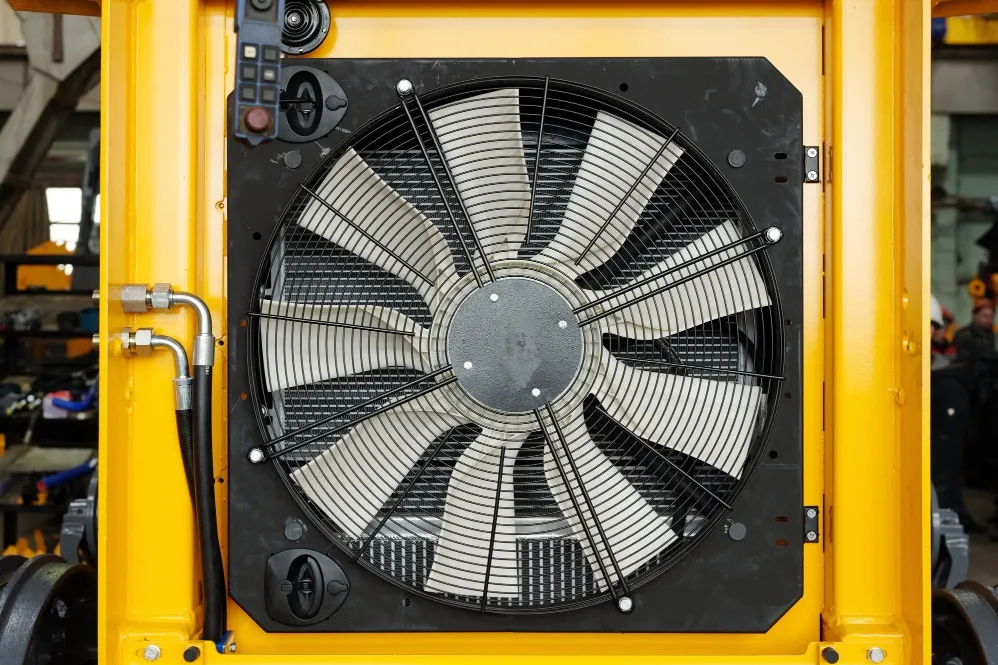
An axial fan moves air approximately parallel to the rotating shaft. Its operating principle resembles a propeller moving air forward.
These fans can be suitable where large volumes of air need to move through relatively low-resistance paths.
Applications can include:
- General factory ventilation
- Warehouse air movement
- Wall-mounted exhaust
- Utility rooms
- Equipment ventilation
- Selected fresh-air applications
Installation requirements vary according to the building and desired airflow.
Where Centrifugal Equipment Differs
Centrifugal blowers change the direction of airflow through an impeller and housing.
They are frequently considered when air must travel through more restrictive duct networks or pass through components that create higher pressure loss.
This makes them common in applications involving longer duct runs, extraction hoods and certain filtration systems.
Consider Static Pressure
Static pressure is one of the most useful factors when comparing these equipment types.
A simple wall opening may present relatively little resistance. A long duct network with several bends and filters can create much more.
Using equipment that cannot overcome the system resistance may result in disappointing airflow even when the fan appears powerful when operated without ducting.
Think About the Application First
Instead of asking which fan type is universally better, identify what the system needs to achieve.
Useful questions include:
- How much airflow is required?
- Is ducting involved?
- How long is the duct route?
- How many bends are present?
- Are filters installed?
- What type of air is being handled?
- How many hours will the fan operate?
- Are there noise limitations?
These answers create a more meaningful basis for equipment selection.
General Ventilation Needs Proper Placement
Even when an axial fan is technically suitable, its location influences performance.
A fan installed where clean incoming air immediately exits without sweeping through the occupied space may provide limited benefit.
Air inlet and outlet positions should encourage useful cross-ventilation through the target area.
This is particularly important in Bengaluru warehouses and production buildings where large floor plates can create stagnant zones.
Do Not Ignore Replacement Air
An exhaust fan removes air from the building, but another source must replace it.
If sufficient replacement air is unavailable, actual exhaust performance may fall and negative pressure can develop.
Fresh-air openings or mechanical supply systems should therefore be considered as part of the overall design.
Evaluate Equipment as Part of a System
Neither axial nor centrifugal equipment is automatically the correct choice for every facility.
Dsv Air System handles industrial air-management requirements where equipment selection is based on airflow demand, pressure conditions and site layout rather than equipment type alone.
An axial flow fan can be an efficient solution when applied within the conditions it is designed to handle. For more restrictive networks, another fan configuration may be more appropriate.
The most reliable selection begins with understanding the airflow path, calculating resistance and matching equipment performance to the actual operating requirement.
Keywords