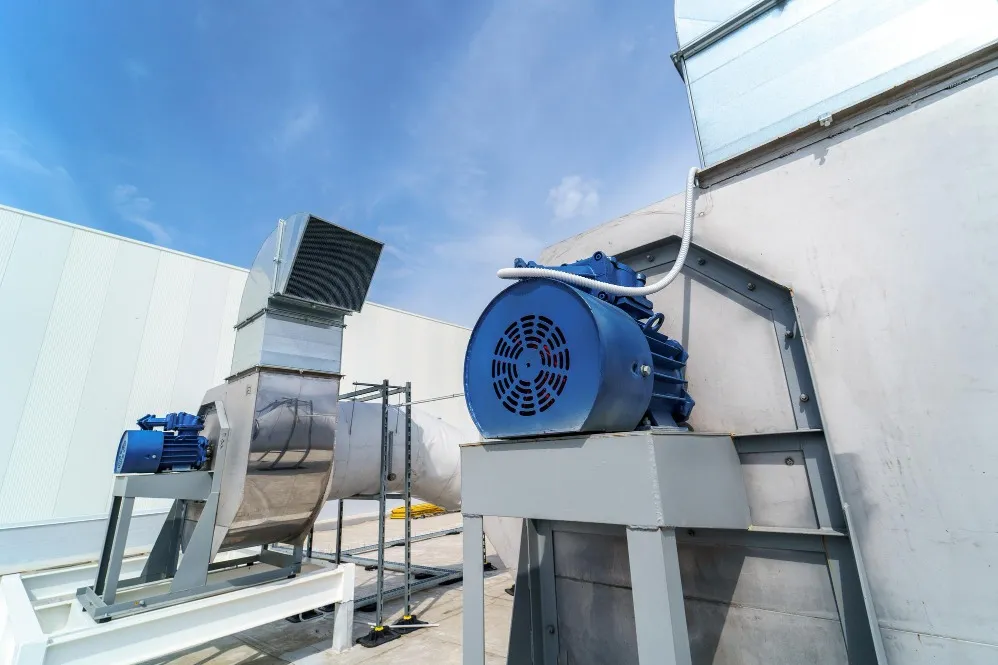
When an industrial exhaust network includes long ducts, filters, multiple bends or other components that create significant resistance, fan selection becomes especially important. A centrifugal blower is commonly considered for applications where air must be moved against higher static pressure.
Choosing one based only on motor power or outlet size can result in poor system performance.
How a Centrifugal Blower Moves Air
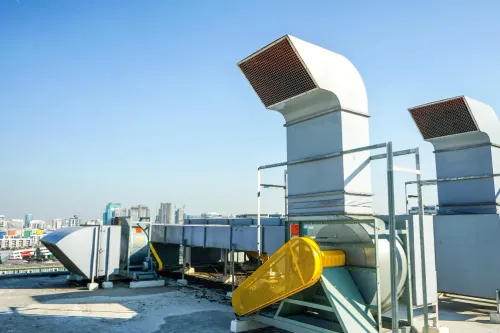
A centrifugal blower draws air into the centre of a rotating impeller. The impeller accelerates the air before directing it outward into the blower housing and connected ductwork.
This operating principle makes centrifugal equipment useful in many ducted ventilation applications.
Typical uses include:
- Industrial exhaust systems
- Dust extraction arrangements
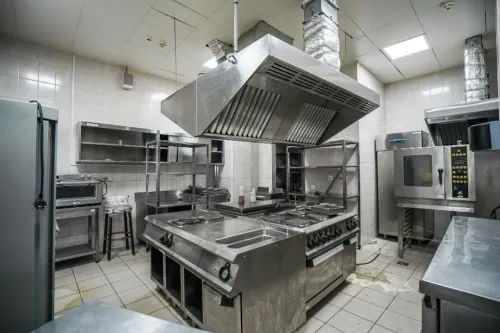
- Commercial kitchen exhaust
- Process ventilation
- Fume extraction
- Air-handling applications
The exact blower design should match the characteristics of the air being handled.
Airflow Capacity Is Only One Selection Factor
A facility may calculate how much air needs to be extracted and then select equipment based on that airflow figure alone.
That approach overlooks system resistance.
Air passing through ducts encounters resistance from:
- Duct length
- Elbows
- Dampers
- Filters
- Hoods
- Transitions
- Grilles
- Other fittings
The blower must deliver the required airflow at the pressure demanded by the complete system.
Why Bigger Is Not Automatically Better
Oversizing is sometimes used as a shortcut when calculations are uncertain.
However, excessive capacity can create unnecessary noise, increased energy consumption and unsuitable airflow velocities. It may also affect process conditions or create excessive negative pressure within the building.
Undersizing creates the opposite problem. The system may fail to capture contaminants effectively at the source.
Selection therefore requires a balance between airflow and pressure.
Consider the Air Being Extracted
The characteristics of the extracted air can influence equipment specification.
A general ventilation application moving relatively clean air is different from a kitchen exhaust containing grease vapours or an industrial process involving dust and elevated temperatures.
Before selecting equipment, identify:
- Air temperature
- Contaminant type
- Dust concentration where applicable
- Moisture conditions
- Required airflow
- System pressure
- Operating hours
These details help determine a suitable configuration.
Compare Performance at the Operating Point
When evaluating blower options, look beyond maximum airflow figures.
The useful question is whether the equipment can provide the required airflow at the expected system pressure.
Performance curves can help engineers understand how airflow changes as resistance increases.
This becomes particularly important for Bengaluru manufacturing facilities with long duct routes caused by building layout constraints.
Think About Long-Term Operation
Industrial ventilation equipment may operate for many hours every day. Energy consumption, vibration, noise and maintenance access therefore matter alongside initial equipment cost.
Facility teams should consider:
- Motor efficiency
- Bearing accessibility
- Impeller cleaning requirements
- Installation space
- Vibration isolation
- Future maintenance access
These factors can affect the total operating experience over the equipment's service life.
Site Conditions Should Guide Selection
A blower cannot be evaluated separately from the duct system it serves.
Dsv Air System works with ventilation applications in Bengaluru where airflow requirements, duct resistance and site conditions need to be considered before equipment selection.
For facilities experiencing weak extraction despite having a seemingly powerful fan, the problem may not necessarily be motor capacity. Duct restrictions, incorrect pressure assumptions or unsuitable equipment selection may be responsible.
Evaluating the complete system is the more reliable approach to centrifugal blower selection.
Keywords