Industrial buildings often begin with a basic ventilation arrangement that works adequately at first. As production increases, machinery is added or building layouts change, indoor heat and stagnant air can become more noticeable. In suitable applications, adding or upgrading an axial flow fan can support higher-volume general air movement.
The important question is whether an axial fan actually matches the resistance and airflow conditions of the facility.
Recognise the Signs of Poor General Ventilation
Ventilation requirements can change gradually, so facility teams may become accustomed to deteriorating conditions.
Indicators worth investigating include:
- Excessive heat during operating hours
- Stagnant zones on the production floor
- Uneven air movement
- Persistent stuffiness
- Heat accumulating near machinery
- Existing fans running continuously with limited effect
- Increased production without ventilation upgrades
These signs justify an airflow assessment rather than automatically adding more fans.
Determine Whether the Problem Is General or Local
This distinction is important.
General ventilation aims to move or replace air throughout a larger space. Local exhaust is intended to capture contaminants directly at their source.
If welding fumes or process contaminants need to be captured before reaching workers, installing a general-purpose axial fan elsewhere in the building may not provide adequate source control.
A dedicated extraction system may be more appropriate.
Understand Where Axial Fans Perform Well
Axial fans are commonly suited to relatively high-airflow, lower-pressure applications.
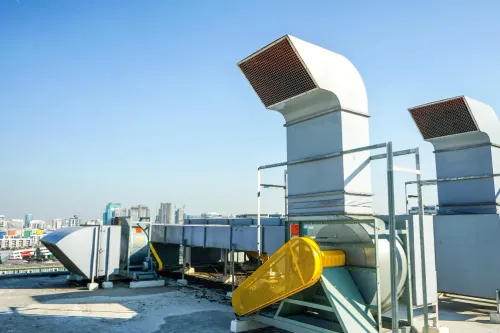
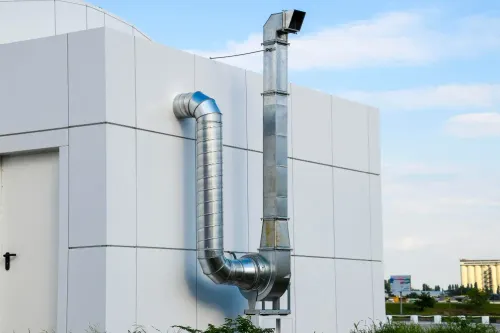
They may be considered for wall exhaust, general factory ventilation, warehouse air movement and selected fresh-air arrangements.
If the proposed installation involves a restrictive duct network, filters or significant static pressure, equipment performance needs closer evaluation.
A centrifugal solution may be more appropriate for some of those conditions.
Review Fan Placement
Adding capacity in the wrong location can produce disappointing results.
The aim should be to create an airflow path through the target area. Fresh air should enter from appropriate points, move through the occupied or heat-affected space and leave through the exhaust side.
Placing supply and exhaust points too close together can create a short airflow path that bypasses much of the building.
Calculate Capacity Rather Than Guessing
Simply choosing a larger diameter fan does not establish whether the ventilation upgrade will work.
The assessment should consider:
- Building volume
- Heat sources
- Occupancy
- Existing ventilation
- Process requirements
- Air inlet availability
- Fan operating characteristics
- Resistance around openings or ducts
These factors help determine the required airflow more reliably.
Review Electrical Consumption
Fans operating throughout a long production shift can contribute meaningfully to electricity consumption.
Equipment selection should therefore consider required performance at the operating point rather than simply installing excess capacity.
Regular cleaning and maintenance can also help prevent avoidable performance losses.
Consider Bengaluru Site Conditions
Bengaluru, Karnataka has a diverse industrial base, including manufacturing, fabrication, warehousing and commercial operations. Ventilation requirements can differ substantially even between neighbouring facilities because processes and building configurations vary.
A site-specific assessment is therefore preferable to copying a fan arrangement from another factory.
Know When Professional Assessment Is Useful
If a facility is expanding production, changing machinery, experiencing persistent heat or struggling with uneven ventilation, an airflow review can identify whether additional axial fans, fresh-air supply, local extraction or duct modifications are appropriate.
Dsv Air System supports industrial ventilation and airflow requirements for Bengaluru facilities, allowing equipment decisions to be evaluated within the context of the complete system.
An axial flow fan can be an effective component of a ventilation upgrade when the application suits its operating characteristics. Matching fan performance, positioning and replacement-air availability to actual site conditions provides a stronger foundation for dependable long-term ventilation.
Keywords