Axial flow fans and centrifugal blowers both move air, but they do so in different ways. Choosing between them depends on how much air must be moved and how much resistance the equipment must overcome. Using the wrong type can produce weak extraction, excessive noise, high electricity consumption or poor airflow at the far end of a duct.
Facility owners and project teams in Bengaluru often encounter this choice while planning ventilation systems for factories, workshops, warehouses, kitchens and commercial buildings. Understanding the basic performance difference makes preliminary system planning much easier.
How an Axial Flow Fan Works
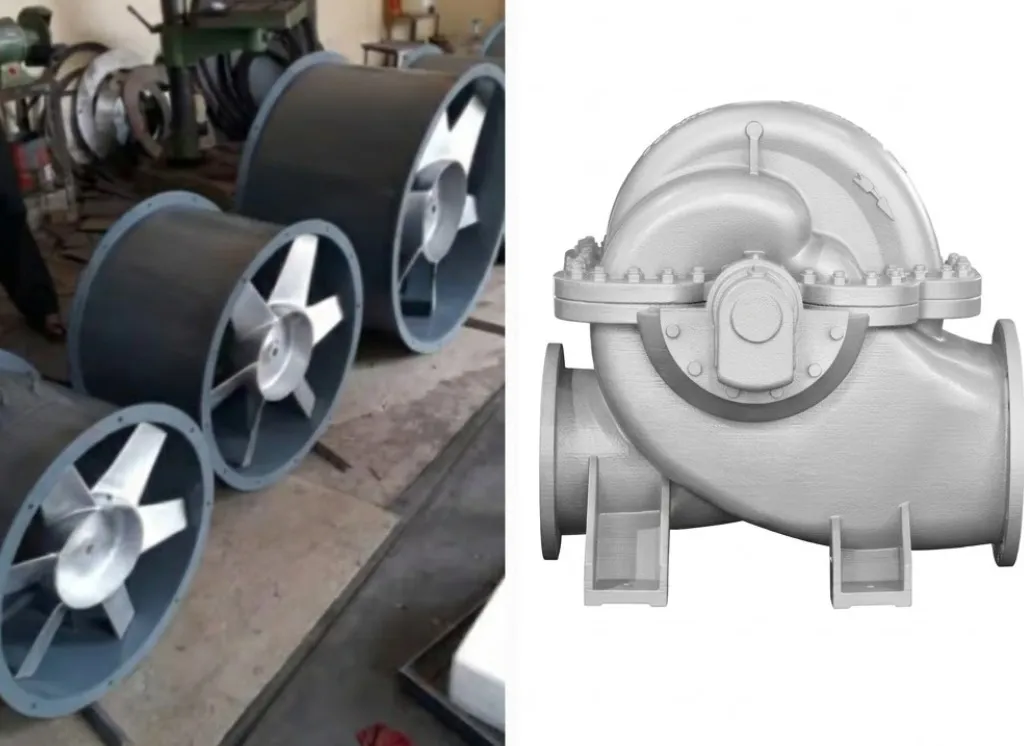
An axial flow fan moves air parallel to the fan shaft. Its blades draw air from one side and discharge it in the same general direction. The movement is similar to the airflow created by a propeller.
Axial fans are well suited to applications that need a high volume of air at relatively low pressure. Common uses include:
- Wall-mounted factory exhaust
- Warehouse ventilation
- General air circulation
- Cooling of equipment rooms
- Fresh-air supply through short openings
- Ventilation through short, uncomplicated ducts
These fans are available in different blade profiles, sizes and motor ratings. However, their airflow can decrease significantly when they are connected to restrictive duct work or systems containing many bends and filters.
How a Centrifugal Blower Works
A centrifugal blower draws air into the centre of an impeller and redirects it outward at approximately 90 degrees. This design allows it to produce higher pressure than many axial fans.
Centrifugal blowers are commonly used when air must travel through:
- Long duct routes
- Multiple bends and branches
- Exhaust hoods
- Filters or scrubbers
- Narrow duct sections
- Process ventilation arrangements
- Industrial exhaust systems with substantial resistance
They can be particularly useful for extracting fumes, smoke, dust-laden air and hot process air from a specific source. Different impeller designs are available for clean air, dusty air, high-temperature exhaust and other operating conditions.
A Practical Comparison
The main difference can be summarised simply: an axial flow fan is generally preferred for high airflow at low resistance, while a centrifugal blower is preferred when higher pressure is required.
An axial fan may be suitable for exhausting warm air directly through an external wall. If that same fan is connected to a lengthy duct with several elbows, its actual airflow may fall below the required level.
A centrifugal blower may maintain airflow more effectively in the second scenario. However, installing one for a basic wall-exhaust application could increase cost, noise and energy use without providing a meaningful benefit.
Factors That Should Guide Selection
Before selecting either option, assess:
- Required airflow: The volume of air that must be supplied or extracted per hour.
- Static pressure: The resistance created by ducts, bends, grilles, hoods and filters.
- Air characteristics: Whether the air contains heat, grease, dust, fumes or corrosive vapours.
- Operating schedule: Whether the fan runs intermittently or continuously.
- Noise limits: Particularly important in offices, restaurants and occupied commercial spaces.
- Installation space: The available area for equipment, ducts and maintenance access.
- Discharge location: The point at which extracted air can be released safely.
Why Fan Capacity Alone Is Not Enough
A fan’s advertised airflow is often measured under low-resistance test conditions. Its performance changes after it is connected to an actual ventilation network. Duct length, elbow geometry, inlet restrictions and dirty filters can all reduce delivered airflow.
Manufacturers such as Dsv Air System in Bengaluru, Karnataka, consider both airflow volume and system resistance when matching air-moving equipment to an application. This approach helps avoid oversized motors, underperforming exhaust points and unnecessary operating costs.
The best choice is determined by the complete airflow path. Evaluating the fan or blower together with its hood, duct network, filters and discharge point leads to a system that performs more predictably.
Keywords