An industrial exhaust system may continue running even when its actual extraction performance has declined. Dsv Air System works with manufacturing facilities that face problems such as lingering fumes, excessive heat, unusual noise, dust accumulation and weak suction at exhaust points.
These symptoms should not be treated only by installing a larger fan. The problem may be caused by blocked filters, leaking ducts, insufficient fresh air or an incorrectly positioned hood. Identifying the source helps restore performance without creating unnecessary energy costs.
Weak Suction at the Hood
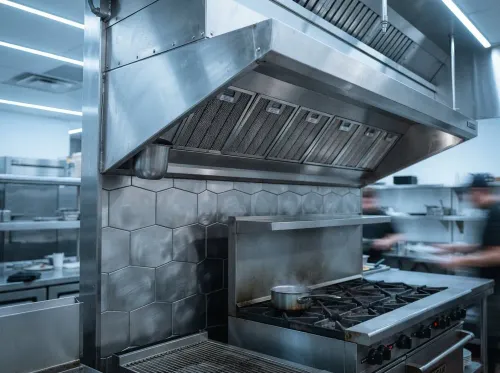
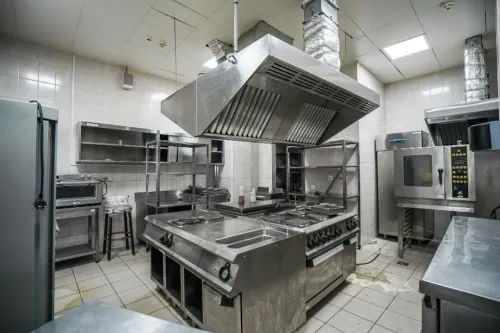
Weak suction is one of the most common complaints. Workers may notice smoke escaping from the sides of an SS hood or fumes spreading before they are captured.
Possible causes include:
- The hood is too small for the source
- Mounting height is excessive
- The duct is undersized
- Filters are clogged
- The fan is rotating in the wrong direction
- Dampers are partially closed
- The blower cannot overcome system resistance
- Replacement air is insufficient
A larger motor will not solve every one of these issues. Airflow and static pressure should be measured before equipment is replaced.
Uneven Extraction Across Multiple Points
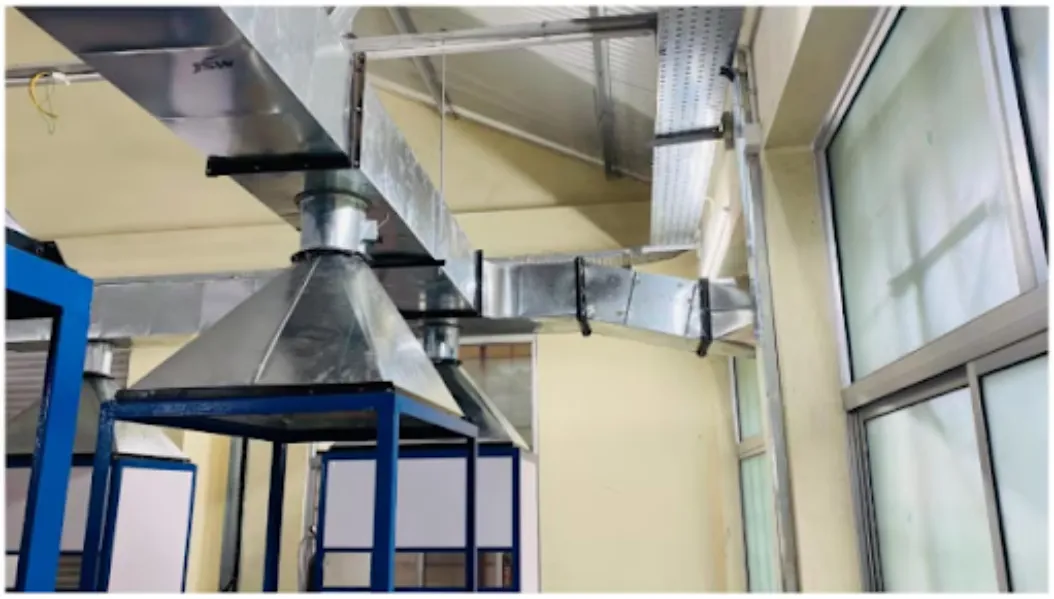
A system serving several machines may extract strongly from the nearest branch and poorly from the farthest one. This usually indicates an unbalanced duct network.
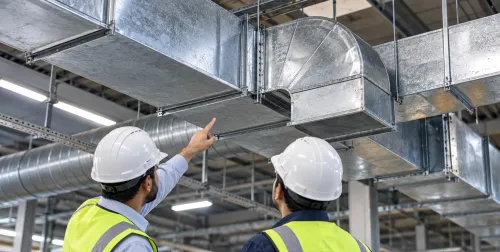
Branch dimensions, damper settings and duct resistance must be reviewed. Air naturally follows the path with the least resistance, so each extraction point needs appropriate balancing.
Changes to the production layout can also disturb an originally balanced system. Adding a new branch without recalculating airflow may reduce extraction at existing machines.
Exhaust Troubleshooting in Bengaluru Industries
Industrial facilities in Bengaluru, Karnataka, often expand in stages. New machinery, enclosed work areas or extended production shifts can increase the ventilation load beyond the original design capacity.
When production changes, the exhaust system should be reassessed. The existing centrifugal blower may have enough capacity but require duct modifications. In other cases, the added process may need a separate local exhaust arrangement to avoid affecting other extraction points.
Seasonal conditions should also be considered. Open doors and windows may temporarily alter pressure patterns, making system performance appear inconsistent.
Excessive Noise and Vibration
Noise may originate from high air velocity, turbulent bends, loose sheet-metal sections, worn bearings or an unbalanced impeller. Vibration can travel through ducts and supporting structures, creating noise in areas far from the blower.
Corrective measures may include:
- Installing flexible connectors
- Reinforcing duct supports
- Replacing abrupt bends
- Correcting fan alignment
- Cleaning or balancing the impeller
- Reducing excessive duct velocity
- Providing vibration-isolation mounts
Persistent vibration should be investigated promptly because it can damage joints and shorten equipment life.
Heat or Fumes Returning Indoors
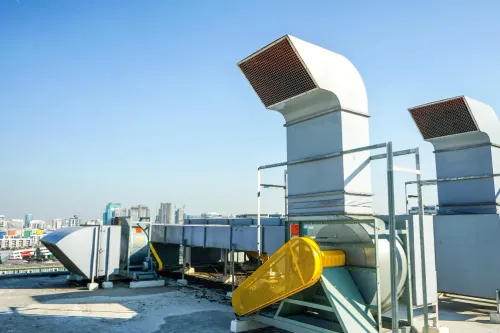
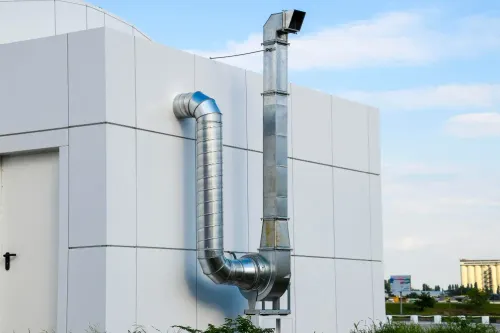
Extracted air can re-enter through nearby windows or fresh-air intakes when the discharge location is unsuitable. A short SS chimney or an outlet facing an obstructed zone may prevent safe dispersion.
The discharge point should be checked in relation to the roof, surrounding structures and outdoor air intakes. Extending or repositioning the chimney may provide a better result than increasing blower capacity.
High Power Consumption
Rising electricity use can indicate dirty filters, restrictive ducts, damaged dampers or inefficient operating practices. A system running continuously at full capacity may also waste energy when only part of the production line is active.
Regular inspection should cover:
- Hood and grille cleanliness
- Filter condition
- Duct leakage
- Belt tension and motor condition
- Blower impeller deposits
- Damper operation
- Actual airflow at key points
Industrial exhaust systems perform best when treated as complete airflow networks. Systematic inspection helps distinguish between equipment faults and design limitations, enabling focused corrections that improve extraction, reliability and energy use.
Keywords