Commercial buildings need more than cooling to maintain a comfortable indoor environment. Offices, restaurants, retail premises, showrooms, gyms and other occupied spaces continuously generate heat, moisture, odours and carbon dioxide. An air conditioner may control temperature, but it does not always provide sufficient outdoor air or remove polluted indoor air.
A coordinated fresh air and exhaust system manages both sides of the airflow cycle. Stale air is removed from areas where pollutants accumulate, while outdoor air is introduced in a controlled manner. This balance is particularly relevant in Bengaluru, where tightly enclosed commercial buildings often depend heavily on mechanical ventilation.
The Role of a Fresh Air System
A fresh air system brings outdoor air into a building and distributes it to occupied areas. Depending on the application, the incoming air may pass through filters and may be cooled or otherwise conditioned before entering the space.
Fresh-air supply helps:
- Dilute carbon dioxide generated by occupants
- Reduce lingering indoor odours
- Replace air removed by exhaust fans
- Improve conditions in enclosed rooms
- Support more consistent building pressure
- Limit uncontrolled air entry through doors and gaps
The required volume depends on occupancy, floor area, activity level and building use. A crowded training room, for example, has different ventilation needs from a lightly occupied retail showroom.
What the Exhaust System Removes
Commercial space exhaust systems draw air away from areas where heat, humidity or pollutants are produced. Typical extraction points include:
- Commercial kitchens
- Toilets and washrooms
- Utility and storage rooms
- Printing or photocopying zones
- Basement areas
- Smoking-designated spaces
- Gyms and changing rooms
- Housekeeping and waste-holding areas
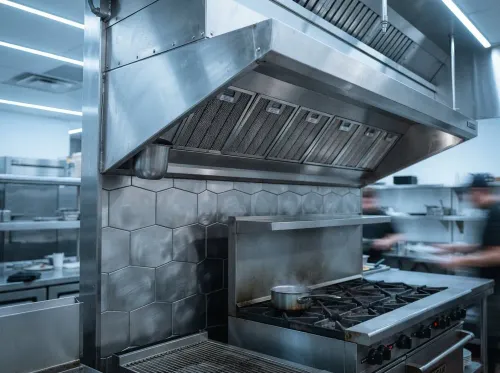
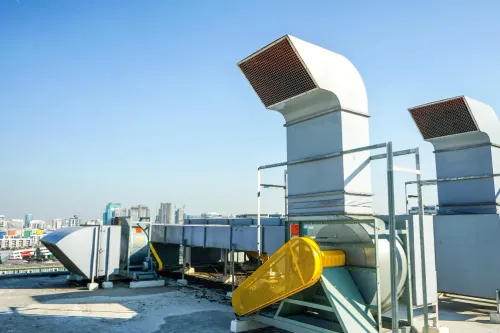
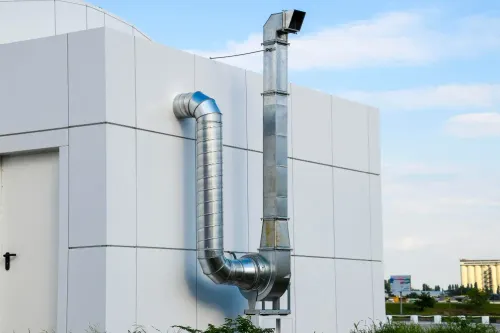
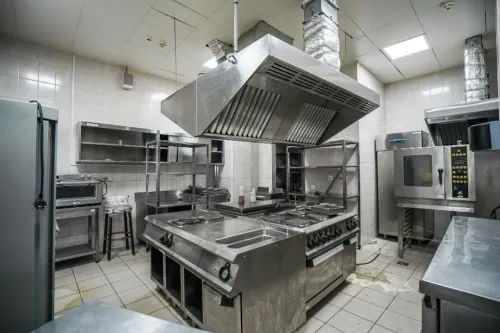
In kitchens, an SS hood captures heat, grease-laden vapour and cooking fumes near the source. The exhaust air then travels through suitable duct work before being discharged outdoors through a safe outlet or SS chimney.
Why the Two Systems Must Be Balanced
If exhaust air is removed without replacement air, the building develops negative pressure. This can make entrance doors harder to operate, draw dust inside and cause unwanted air movement between rooms. Kitchen exhaust may also lose effectiveness because there is insufficient air available to replace what is being removed.
Excessive fresh-air supply can create positive pressure. Some positive pressure may be useful in selected clean or occupied zones, but too much can push odours and moisture into adjoining spaces.
Balanced ventilation controls where air enters, how it moves through the building and where it leaves.
Air Should Move from Cleaner to Less-Clean Areas
A well-planned system encourages airflow from cleaner occupied zones towards spaces that generate odours or pollutants. Fresh air might enter an office or dining area, pass through a transitional space and then be extracted from a washroom or service area.
This movement helps prevent unwanted air from flowing in the opposite direction. Exhaust outlets should also be positioned away from fresh-air intakes so discharged contaminants are not drawn back into the building.
Common Causes of Poor Commercial Ventilation
Several problems can reduce system effectiveness:
- Blocked or dirty filters
- Undersized ducts
- Incorrectly positioned supply grilles
- Insufficient replacement air
- Exhaust fans selected without pressure calculations
- Fresh-air intakes located near polluted discharge points
- Unbalanced airflow between rooms
- Lack of maintenance access
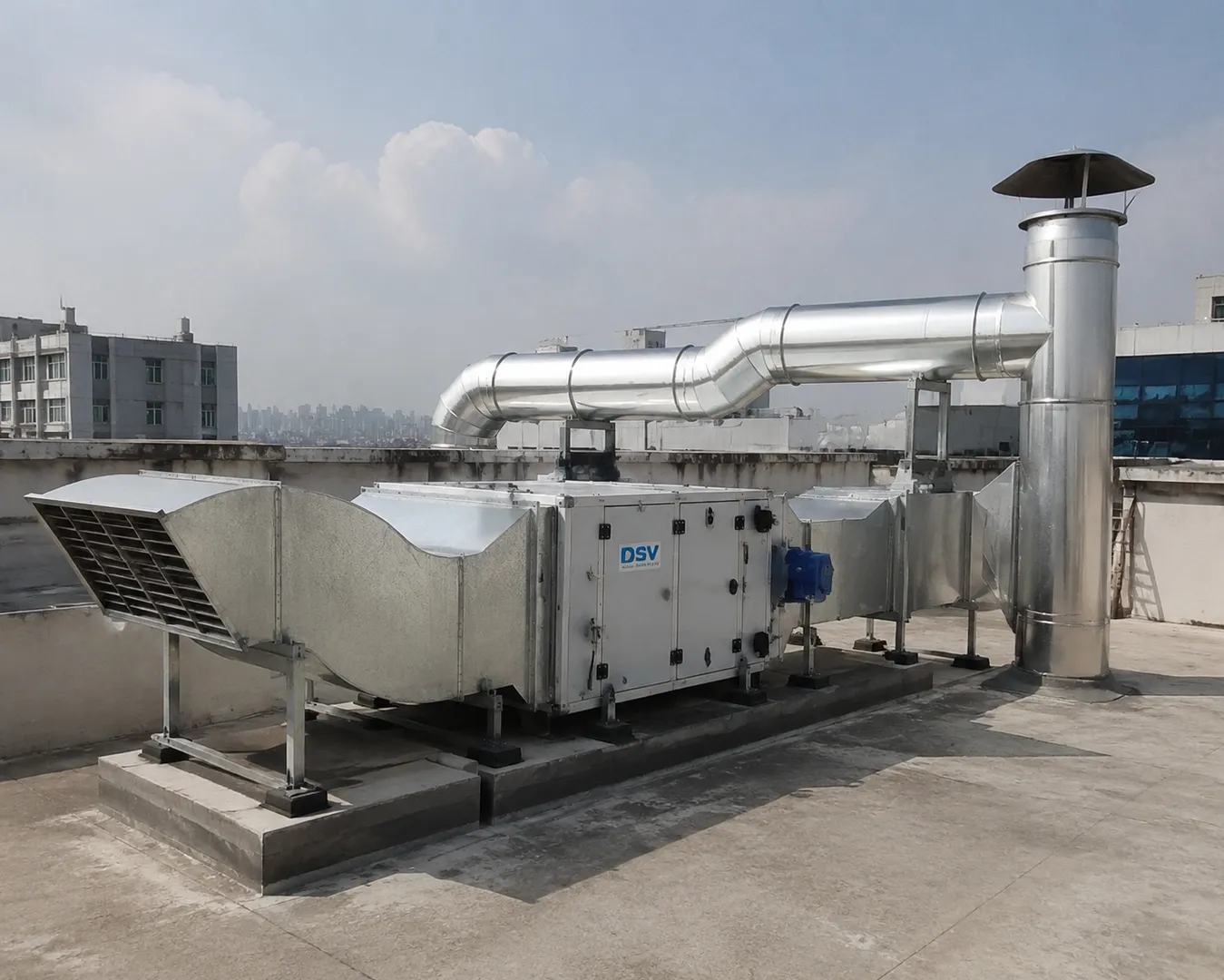
Dsv Air System manufactures ventilation systems and components for commercial applications in Bengaluru, Karnataka. Effective planning requires attention to occupancy, room use, pollutant sources and the complete duct route rather than relying on a single fan.
Fresh-air supply and exhaust are complementary functions. When properly coordinated, they improve indoor air quality, control odours and support a more comfortable commercial environment without placing unnecessary strain on cooling equipment.
Keywords