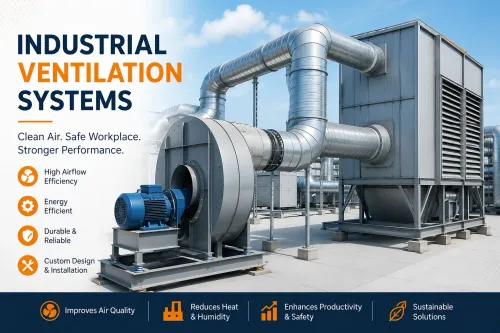
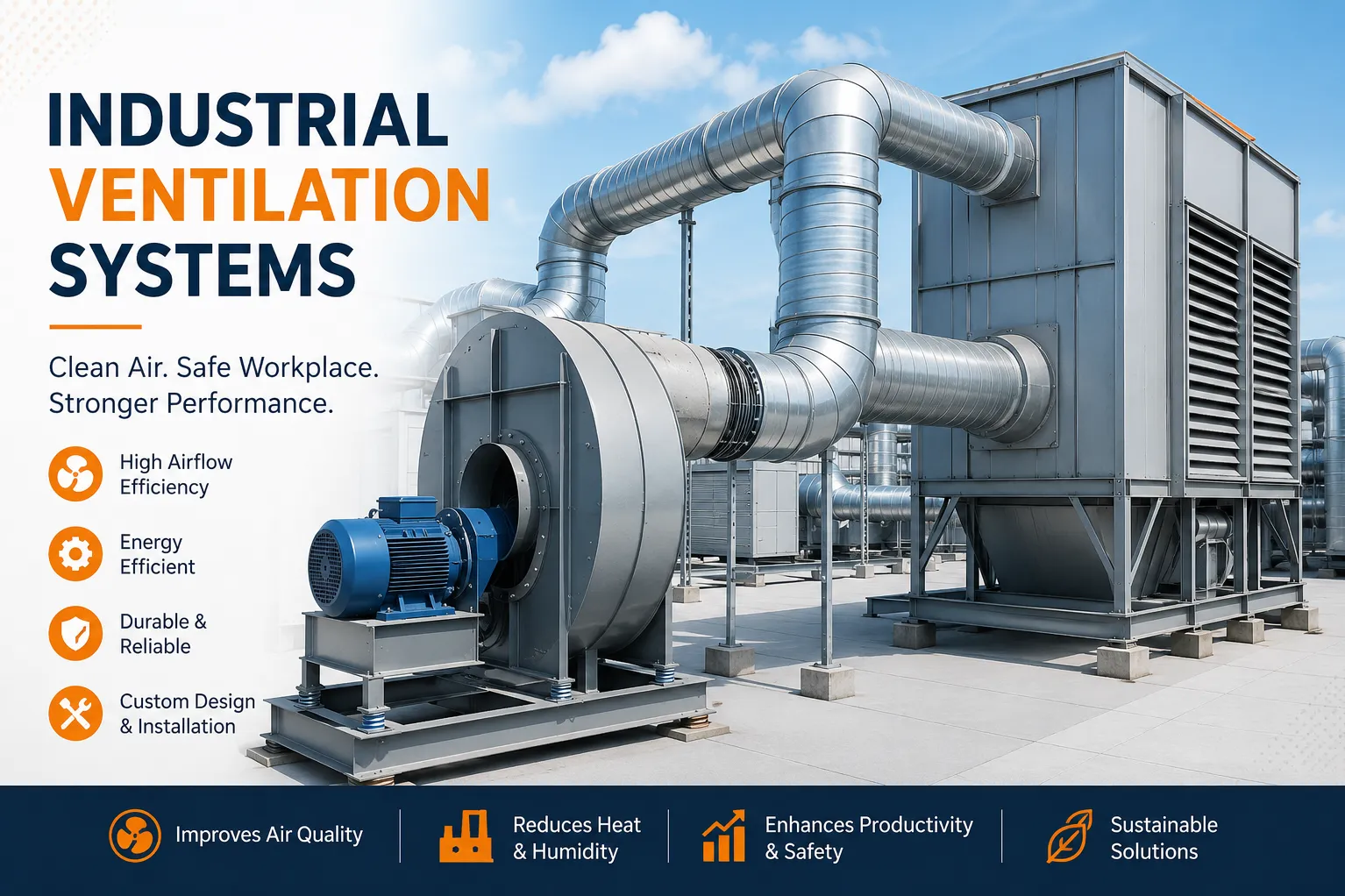
Industrial facilities generate heat, fumes, dust, moisture and airborne contaminants as part of everyday operations. Without planned air movement, these pollutants can accumulate around workers, machinery and production areas. Industrial ventilation systems help manage these conditions by removing contaminated air and supplying cleaner, fresher air where it is needed.
For manufacturing units in Bengaluru, ventilation planning is especially important. The city’s changing temperatures, seasonal humidity and expanding industrial activity can place additional pressure on enclosed production spaces. A suitable system supports a safer working environment while helping equipment and processes operate more consistently.
What Does an Industrial Ventilation System Do?
An industrial ventilation system controls the movement, extraction and replacement of air within a facility. Its primary functions may include:
- Removing fumes, smoke, dust and process odours
- Extracting excessive heat from production areas
- Supplying fresh outdoor air to occupied spaces
- Controlling moisture and indoor humidity
- Preventing polluted air from spreading between work zones
- Maintaining comfortable conditions for employees
- Supporting process-specific air quality requirements
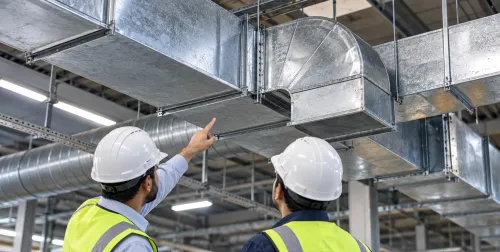
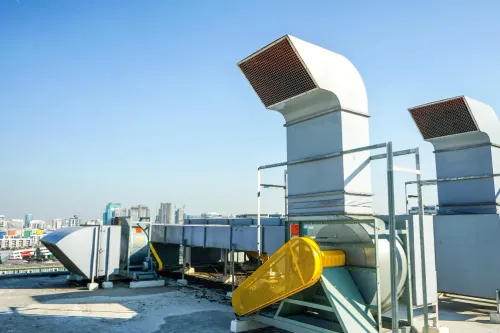
The system may use duct work, centrifugal blowers, axial flow fans, exhaust hoods and fresh air inlets. These components must work together rather than operate as unrelated installations.
General Ventilation and Local Exhaust Ventilation
Industrial air movement is usually managed through general ventilation, local exhaust ventilation or a combination of both.
General ventilation dilutes heat and contaminants by replacing stale indoor air with cleaner outdoor air. It is useful in large spaces where pollutants are produced at relatively low levels across a broad area.
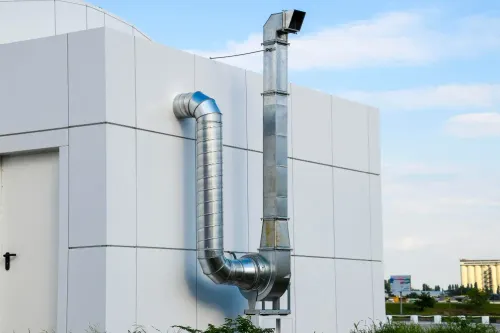
Local exhaust ventilation captures pollutants close to their source. An SS hood positioned above a heat-, smoke- or fume-producing process can collect contaminated air before it reaches the wider workplace. The captured air then passes through ducts and is discharged safely through an exhaust outlet or SS chimney.
Local extraction is generally more effective when a process releases concentrated fumes, oil mist, smoke or fine airborne particles.
Why Airflow Balance Matters
Installing a powerful exhaust fan does not automatically create effective ventilation. When too much air is removed without adequate replacement air, negative pressure can develop inside the building. This may cause doors to become difficult to open, outdoor dust to enter through gaps and exhaust systems to perform inconsistently.
A fresh air system replaces the extracted air in a controlled manner. Balanced airflow helps maintain predictable pressure, improves pollutant removal and prevents uncomfortable draughts around occupied areas.
The location of supply and exhaust points also matters. If fresh air enters too close to the exhaust outlet, it may leave the building before circulating through the required zone. This condition, known as short-circuiting, reduces ventilation effectiveness.
Choosing Air-Movement Equipment
Different applications require different fan arrangements.
Axial flow fans move large volumes of air through relatively low-resistance paths. They are commonly considered for wall-mounted exhaust, general air circulation and short duct runs.
Centrifugal blowers can overcome higher resistance caused by longer ducts, bends, filters, dampers and hoods. They are often used for process exhaust and ducted industrial ventilation systems.
The correct choice depends on required airflow, static pressure, contaminant type, operating temperature and duct layout. Selecting equipment based only on fan diameter or motor capacity can result in poor performance and unnecessary power consumption.
Ventilation Is a Complete System
Effective ventilation begins with understanding where contaminants are produced, how they travel and where clean air should enter. Dsv Air System manufactures ventilation components and systems for industrial applications in Bengaluru, Karnataka, where every facility may present a different airflow challenge.
A well-planned installation combines source capture, suitable duct sizing, balanced fresh-air supply and safe discharge. When these elements are designed as one coordinated system, ventilation becomes more reliable, energy-conscious and easier to maintain.
Keywords