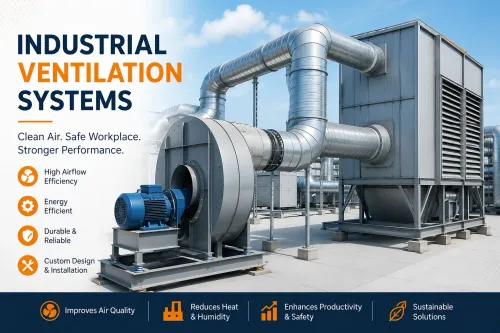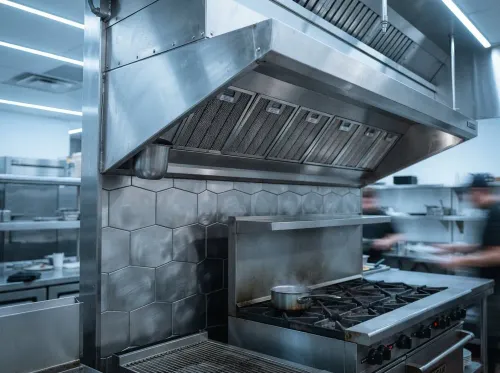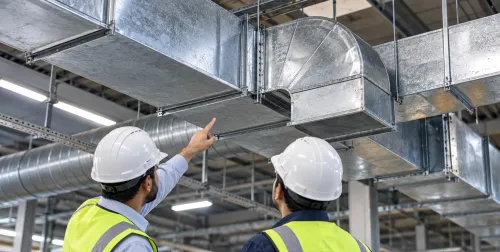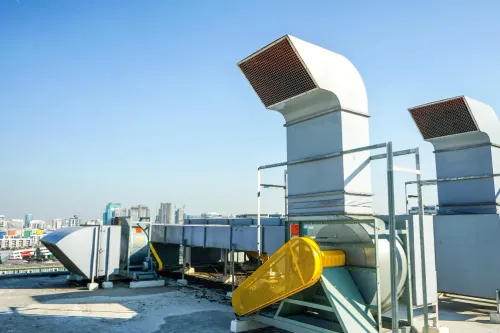
An SS chimney must safely discharge heat, smoke, fumes or process gases while remaining stable under demanding operating conditions. Dsv Air System manufactures SS chimneys for industrial and commercial exhaust applications, with designs adapted to the temperature, airflow, contaminants and layout of each facility.
Choosing a chimney based only on its diameter or height can lead to poor draught, corrosion, excessive vibration and unsafe discharge. The complete exhaust route must be evaluated before fabrication begins.
Start with the Exhaust Application
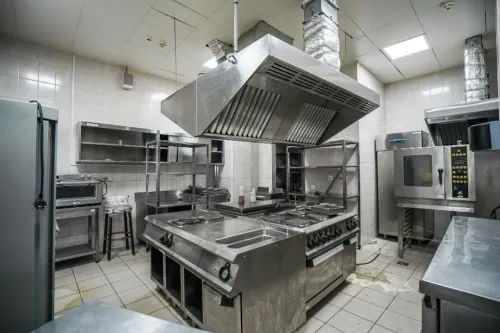
The intended use determines the chimney’s basic design. A chimney connected to a commercial kitchen handles grease-laden vapour, while one serving a furnace or industrial process may carry hot gases, chemical fumes or particulate matter.
Before selecting a system, identify:
- The type of smoke, vapour or gas being discharged
- Normal and maximum operating temperatures
- Required exhaust airflow
- Moisture and corrosive properties
- Expected operating hours
- Applicable filtration requirements
- Available installation space
- Safe discharge height
These details influence the stainless-steel grade, sheet thickness, insulation, joining method and structural support.
Selecting the Appropriate Stainless-Steel Grade
Not every stainless-steel grade performs equally in every environment. The right material depends on the chemical nature of the exhaust and the surrounding conditions.
SS 304 is commonly considered for general kitchen and commercial exhaust applications because it provides good corrosion resistance and is easy to clean. SS 316 may be more suitable where the air contains aggressive chemicals, salts or higher levels of corrosive moisture.
Material thickness also matters. Thin sheets may deform under high temperatures or develop vibration-related damage. Excessively heavy construction can increase project cost and structural load without providing a functional advantage.
SS Chimney Planning for Bengaluru Facilities
Factories and commercial kitchens in Bengaluru, Karnataka, may operate close to offices, residential buildings or other occupied properties. The discharge point must therefore be selected carefully so fumes and odours do not re-enter the same building or affect surrounding spaces.
The chimney outlet should be positioned away from fresh-air intakes, windows and frequently occupied zones. Its height must support safe dispersion while accounting for nearby roofs, taller structures and prevailing airflow around the building.
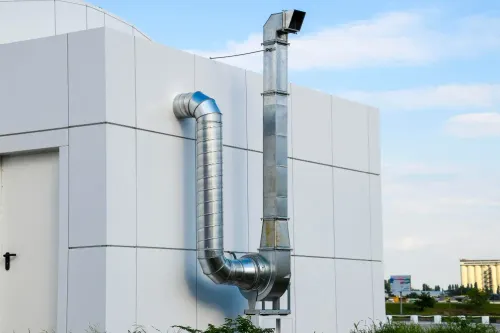
Local site limitations may require wall-mounted supports, rooftop structures or self-supported arrangements. Structural stability becomes particularly important for tall installations exposed to wind.
Check the Diameter and Air Velocity
An undersized chimney creates excessive resistance and can reduce exhaust performance. It may also increase noise and place additional load on the centrifugal blower.
An oversized chimney may reduce air velocity below an effective level. In some applications, this can encourage residue accumulation or weaken the discharge pattern.
Correct sizing considers both airflow volume and acceptable velocity. Pressure losses from the SS hood, duct work, bends, filters and chimney must be added to determine the blower requirement.
Insulated or Non-Insulated Construction
Insulation may be needed when the exhaust temperature is high or when surface temperature presents a safety concern. It can reduce heat transfer to surrounding areas and help control condensation in certain applications.
Double-wall chimneys commonly use an inner stainless-steel layer, insulation and an external protective layer. Non-insulated construction may be sufficient for lower-temperature exhaust where surface heat and condensation are not significant concerns.
Review Fabrication and Maintenance Access
Good fabrication supports airtight operation and long-term durability. Joints, flanges, supports and access provisions should be suitable for the application.
A reliable SS chimney should include:
- Properly sealed connections
- Suitable supports and bracing
- Inspection or cleaning access
- Condensate drainage where required
- Weather protection at exposed sections
- Appropriate termination design
- Safe access for periodic maintenance
The right SS chimney is not an isolated vertical pipe. It is the final discharge section of a coordinated industrial exhaust system. Evaluating material, dimensions, support, insulation and airflow together results in safer operation and more consistent extraction.
Keywords