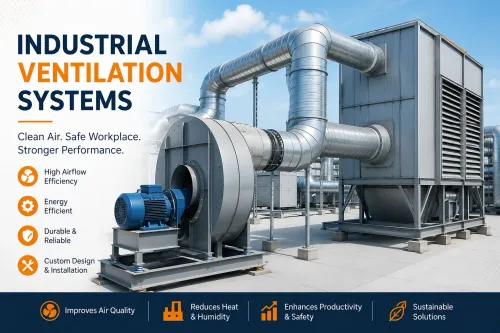
A commercial ventilation system affects indoor comfort, odour control, air freshness and the performance of cooling equipment. Dsv Air System manufactures ventilation solutions for offices, restaurants, retail spaces, showrooms, gyms and other commercial environments where occupancy and indoor activities create changing airflow demands.
Evaluating a system requires more than checking whether air is coming from a grille. Air quantity, distribution, pressure balance, noise and pollutant removal must all be considered.
Begin with the Way the Space Is Used
Two buildings of the same size can have very different ventilation needs. An office may need steady fresh-air supply for employees, while a restaurant must also remove heat and cooking fumes. A gym experiences higher moisture, odour and carbon dioxide levels because of physical activity.
Document:
- Maximum and normal occupancy
- Operating hours
- Heat-producing equipment
- Odour and moisture sources
- Rooms with limited natural ventilation
- Existing air-conditioning capacity
- Toilet, kitchen and utility exhaust requirements
- Areas with special air-quality needs
This information establishes the actual demand rather than relying only on floor area.
Check Fresh-Air Distribution
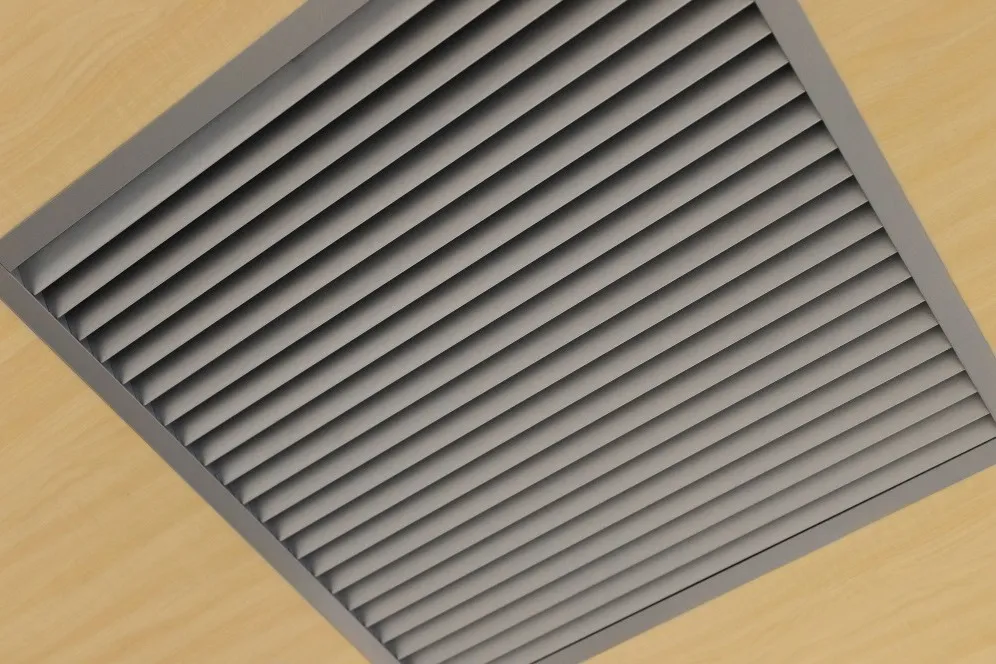
Fresh air should reach occupied zones without causing strong draughts or leaving stagnant corners. Grille placement, ceiling height, partitions and furniture can all influence circulation.
A system may supply the calculated volume but still feel uncomfortable if most air enters one part of the room. Meeting rooms, cabins and other enclosed spaces often need dedicated consideration because internal partitions can interrupt the intended airflow path.
Filters should also be accessible and appropriate for outdoor conditions. Dirty filters restrict supply and can increase the load on fans.
Commercial Ventilation Assessment in Bengaluru
Commercial properties in Bengaluru, Karnataka, range from compact converted buildings to large purpose-built complexes. Existing properties may have restricted service shafts, low ceiling voids or limited outdoor discharge options.
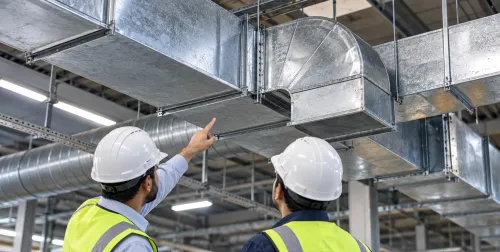
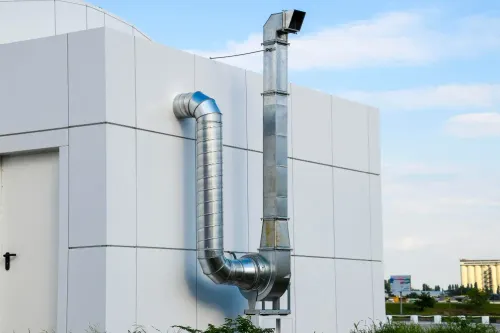
A practical assessment should inspect the entire route from the fresh-air intake to the indoor supply points and from the exhaust grilles to the final discharge. Outdoor intakes must not be located near vehicle emissions, waste areas, kitchen exhaust outlets or other contamination sources.
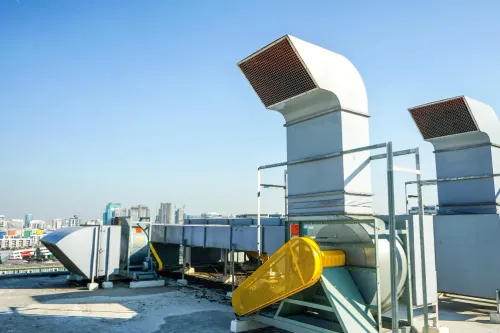
The evaluation should also account for surrounding buildings that may affect air movement near rooftop outlets.
Review Exhaust Performance
Exhaust should be provided where pollutants are generated. Toilets, kitchens, housekeeping rooms and waste-holding areas generally need dedicated extraction.
Signs of inadequate exhaust include:
- Persistent odours
- Condensation on walls or ceilings
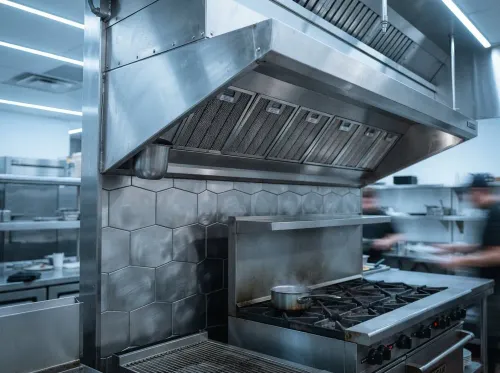
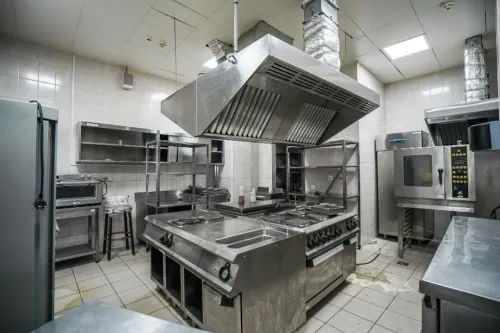
- Smoke escaping from an SS hood
- Warm, stuffy service areas
- Odours moving into cleaner rooms
- Doors slamming or becoming difficult to open
- Visible residue around grilles
These problems can result from insufficient airflow, blocked ducts, poor pressure balance or incorrect exhaust-point placement.
Compare Axial Fans and Centrifugal Blowers
Axial flow fans are often suitable for direct wall exhaust and short, low-resistance air paths. Centrifugal blowers are generally better suited to systems with longer ducts, several bends, filters or higher pressure requirements.
The decision should be based on the system resistance rather than the physical size of the space alone. A small commercial kitchen with a long duct route may need a higher-pressure blower, while a large open hall with direct wall ventilation may use axial fans effectively.
Look Beyond Initial Installation Cost
A lower-priced system can become costly if it creates high electricity use, frequent breakdowns or repeated complaints from occupants. Evaluation should include:
- Energy consumption
- Noise levels
- Ease of cleaning
- Filter replacement access
- Availability of maintenance space
- Equipment durability
- Future changes in occupancy
- Potential expansion of the premises
An effective commercial ventilation system should provide measurable airflow, balanced pressure and accessible maintenance points. Assessing these factors before selection helps create a healthier indoor environment and reduces the need for repeated modifications after installation.
Keywords