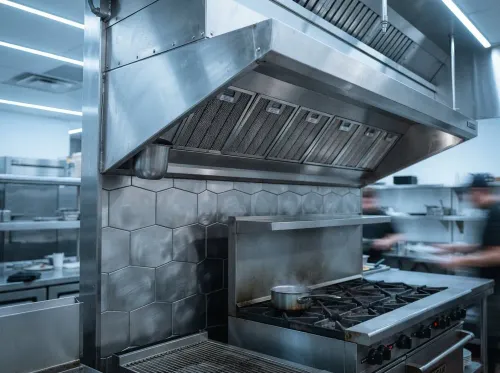
An SS hood captures smoke, heat, fumes, grease or vapour before these contaminants spread through a workplace. Dsv Air System designs and manufactures stainless-steel hoods for commercial kitchens and industrial work areas, where proper source capture is essential for effective ventilation.
A hood that looks large enough may still perform poorly if its depth, mounting height, airflow or duct connection is unsuitable. Buyers should evaluate how the contaminant behaves at the source rather than choosing a standard size without an application assessment.
Identify What the Hood Must Capture
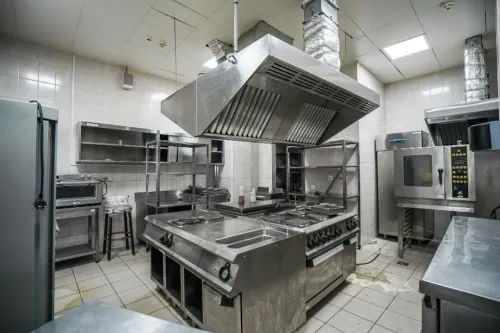
Kitchen hoods typically handle cooking heat, smoke, odours and grease-laden vapour. Industrial hoods may collect welding fumes, steam, hot air, oil mist, process smoke or light airborne particles.
The contaminant’s movement affects hood selection. Hot fumes usually rise, but cross-draughts from doors, windows, ceiling fans or air-conditioning outlets can push them away from the capture zone. Heavier particles may require a different hood position and higher capture velocity.
The hood should extend beyond the active source wherever practical. Insufficient overhang allows fumes to escape around its edges.
Wall-Mounted and Island Hoods
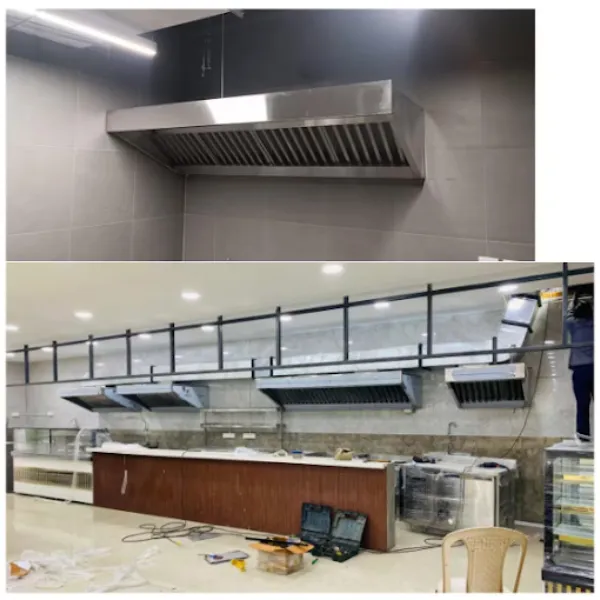
Wall-mounted hoods are installed against a wall above the source. The wall helps restrict airflow from one side, which can make capture more manageable. They are frequently used over cooking lines and process equipment positioned near a wall.
Island hoods are suspended above equipment located away from walls. Because air can approach from every direction, they often require greater overhang and higher exhaust volume.
Other configurations include:
- Canopy hoods for rising heat and fumes
- Side-draft hoods for processes requiring open overhead access
- Back-draft hoods for bench-level contaminant capture
- Enclosed hoods for stronger containment
- Custom hoods shaped around machinery or production lines
The correct arrangement depends on access requirements, source dimensions and contaminant direction.
SS Hood Selection for Bengaluru Projects
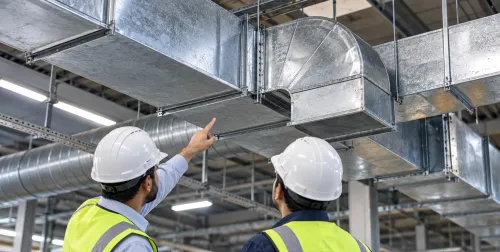
Commercial kitchens and industrial facilities in Bengaluru, Karnataka, often have limited ceiling space and shared service routes. Before finalising a hood, the available path for duct work, the position of the centrifugal blower and the outdoor discharge location should be checked.
The fresh air system also needs consideration. Strong air jets directed towards the hood can disturb rising fumes and cause spillage. Replacement air should enter at a controlled velocity without creating uncomfortable draughts around workers.
Planning these details early prevents conflicts with electrical trays, fire systems, false ceilings and structural beams.
Consider Material Grade and Construction
SS 304 is widely used for commercial kitchen hoods because it provides a cleanable surface and good corrosion resistance. Industrial applications involving more aggressive fumes may require another stainless-steel grade.
Construction quality should be assessed through:
- Sheet thickness and rigidity
- Smooth internal surfaces
- Properly finished edges
- Sealed and accessible joints
- Secure hanging or wall supports
- Suitable duct collar dimensions
- Drainage arrangements where grease or condensation is expected
- Easy access to filters and internal surfaces
The hood should remain stable during operation and withstand routine cleaning.
Filters and Maintenance Access
Kitchen exhaust hoods commonly use baffle filters to capture grease before it enters the duct network. Filters should be removable without specialised tools and installed at a suitable angle for drainage.
Industrial applications may need mesh filters, cartridge filters, spark-control arrangements or external air-cleaning equipment. The selection depends on the pollutant and process risk.
Maintenance access is not optional. Accumulated grease, dust or residue can restrict airflow and increase hygiene or fire concerns. A design that is difficult to inspect will usually become harder to maintain over time.
Match the Hood with the Entire Exhaust System
An effective SS hood depends on sufficient airflow at its face. Duct resistance, blower performance and discharge conditions all influence capture.
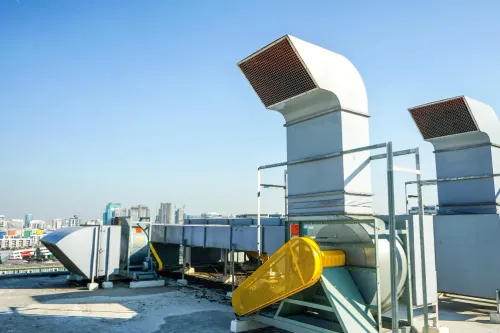
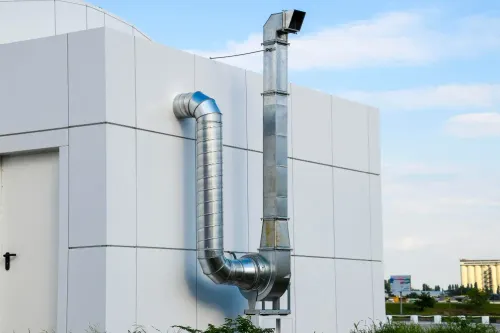
The best buying decision considers the hood, filters, duct route, centrifugal blower, fresh-air supply and SS chimney together. When these elements are correctly matched, contaminants are captured closer to their source and the surrounding work area remains noticeably cleaner.
Keywords