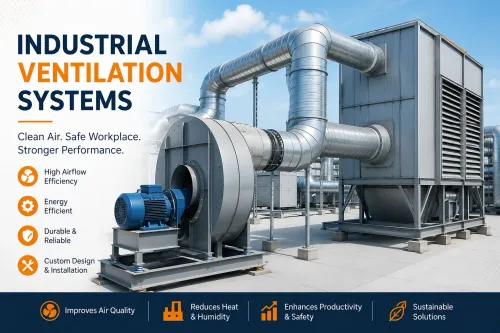
A commercial exhaust system may continue running even when it no longer meets the needs of the building. Dsv Air System manufactures and upgrades exhaust systems for commercial kitchens, restaurants, offices, retail spaces, gyms and other commercial properties.
Weak extraction, lingering odours and excessive heat are sometimes treated as routine maintenance issues. However, they may indicate that the exhaust capacity, duct layout or fresh-air arrangement is no longer suitable for current operations.
Persistent Odours and Poor Air Quality
Odours that remain after cooking, cleaning or other activities have stopped can indicate inadequate extraction. Dirty filters or ducts may be responsible, but the original exhaust capacity may also be too low.
The problem often becomes more noticeable after:
- Adding new kitchen equipment
- Increasing daily production
- Extending operating hours
- Creating enclosed rooms
- Installing partitions or false ceilings
- Increasing employee or customer occupancy
An airflow assessment can reveal whether the system needs cleaning, balancing, modification or replacement.
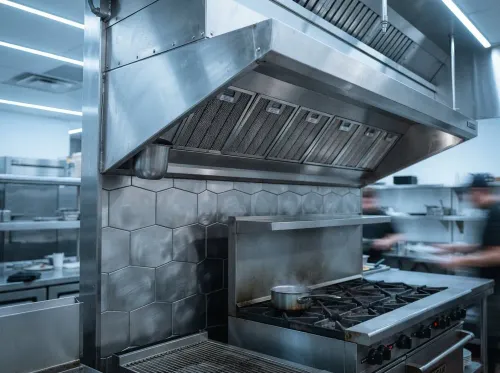
Smoke Escaping from the SS Hood
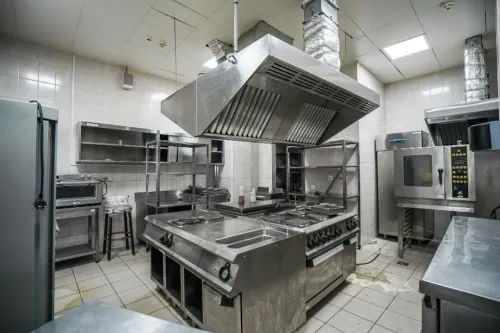
An SS hood should capture smoke, vapour, grease and heat close to their source. If fumes escape from the front or sides, the hood may be too small, mounted too high or connected to an unsuitable blower.
Cross-draughts from ceiling fans, doors or air-conditioning outlets can also interrupt capture. Installing a more powerful blower may not solve the issue if the hood design or fresh-air supply is incorrect.
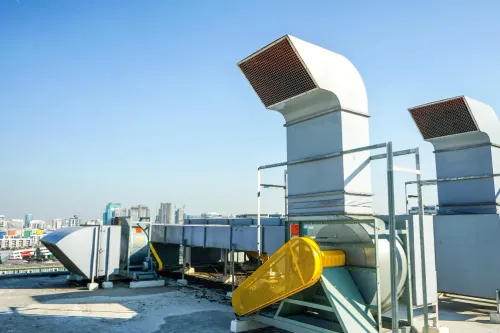
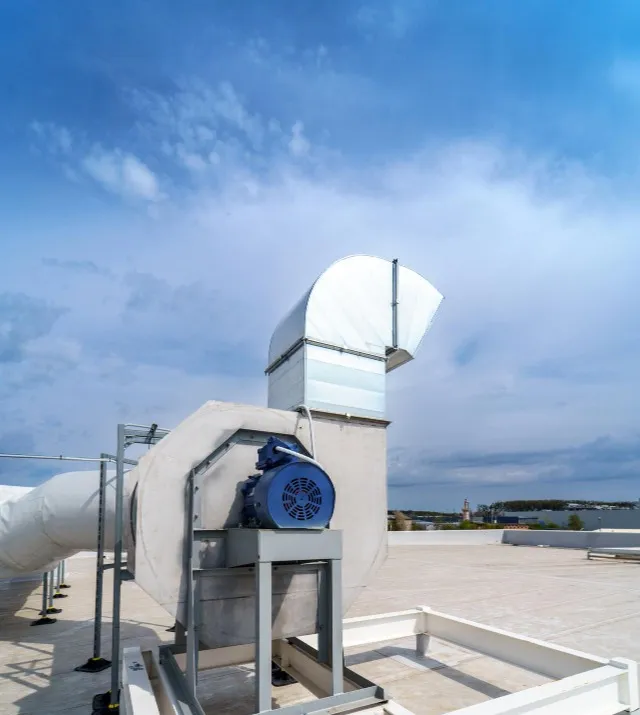
The hood, filters, duct work, centrifugal blower and final discharge should be evaluated as one connected system.
Exhaust System Upgrades for Bengaluru Properties
Commercial properties in Bengaluru, Karnataka, frequently undergo changes in layout or operating capacity. A restaurant may add cooking appliances, while an office may convert an open area into cabins and meeting rooms. The original ventilation arrangement may not support these changes.
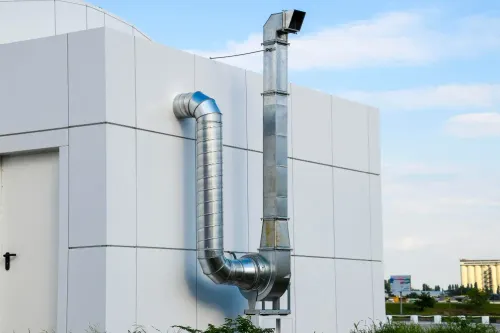
Existing buildings can also have limited ceiling space and restricted discharge options. The exhaust outlet must remain away from windows, occupied areas and fresh-air intakes so discharged odours do not return indoors.
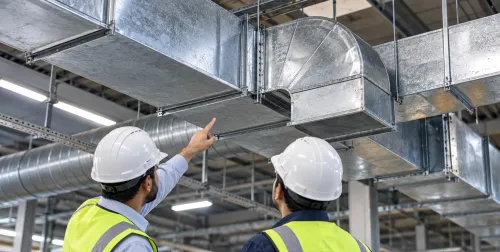
A site assessment helps determine whether existing ducts can be retained or whether sections must be resized or rerouted.
Noise, Vibration and Rising Energy Use
Increasing noise may result from worn bearings, loose supports, an unbalanced impeller or excessive air velocity inside undersized ducts. Persistent vibration can damage joints and disturb occupants in nearby areas.
Higher power consumption may indicate:
- Clogged filters
- Restricted ducts
- An inefficient fan or blower
- Incorrect damper settings
- Air leakage
- Continuous operation at unnecessary capacity
- Poorly matched equipment
Depending on the findings, improvements may include cleaning, balancing, vibration isolation, duct modification or new energy-efficient equipment.
Pressure Problems Inside the Building
Doors that are difficult to open, air rushing through gaps and outdoor dust entering around shutters are signs of negative pressure. This occurs when more air is exhausted than supplied.
A suitable fresh air system replaces extracted air in a controlled manner. Balanced airflow improves hood performance, limits uncontrolled dust entry and creates more comfortable indoor conditions.
Frequently Asked Questions
Can an existing exhaust system be upgraded without complete replacement?
Yes. If the main equipment and ducts are in usable condition, targeted changes may be sufficient. These can include replacing the blower, resizing selected duct sections, improving the hood, adding fresh-air supply or repositioning the discharge outlet.
How do I know whether the exhaust fan is undersized?
Common signs include weak suction, lingering odours, smoke escaping from the hood and poor extraction at distant grilles. Airflow and static-pressure measurements are needed to confirm whether the fan is undersized.
Will a bigger blower always improve extraction?
No. A larger blower may increase noise and energy use without correcting a poorly positioned hood, blocked filter or restrictive duct. The entire system should be inspected before changing capacity.
How often should commercial exhaust systems be inspected?
Inspection frequency depends on usage and contaminant load. Commercial kitchen systems generally require more frequent attention because grease can accumulate in filters, hoods and ducts.
Dsv Air System can assess existing commercial exhaust systems and recommend suitable modifications based on actual site conditions. Schedule a site assessment to plan a practical and maintainable upgrade.
Keywords