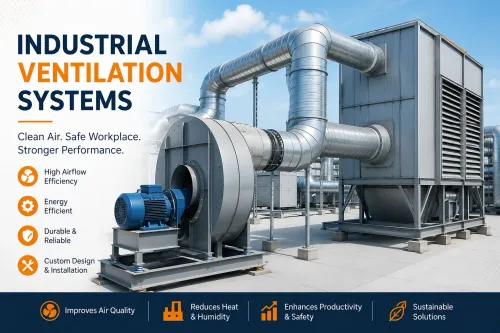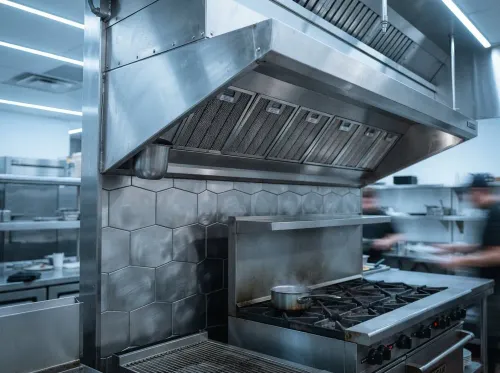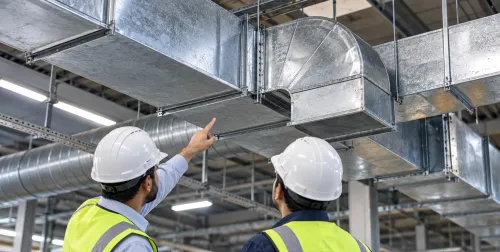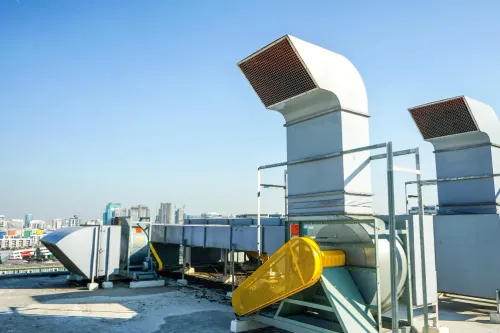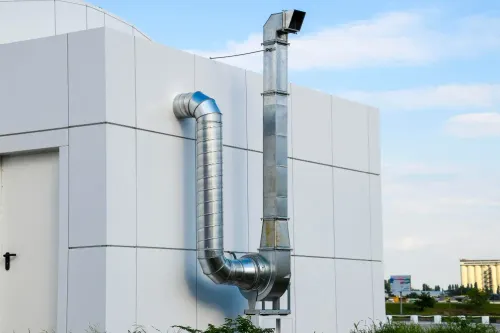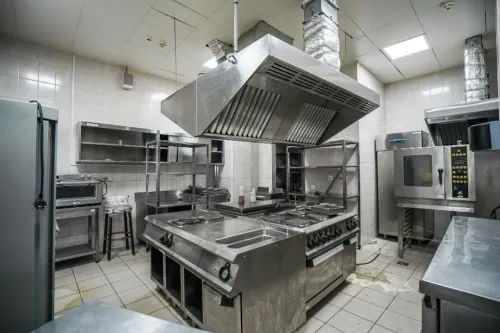
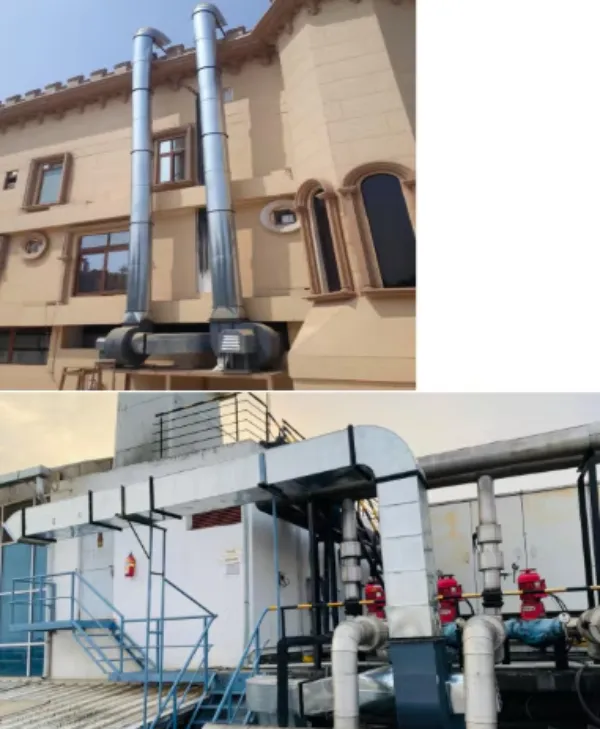
Duct work is the pathway that carries fresh or contaminated air through a building. Although fans and blowers receive much of the attention during ventilation planning, the duct network has an equally important influence on airflow, noise, energy use and extraction performance.
Poorly planned ducts can restrict even a correctly selected fan. Air may fail to reach distant rooms, fumes may escape from an exhaust hood, or the system may consume more electricity than expected. For industrial and commercial facilities in Bengaluru, proper duct design is therefore a functional requirement rather than a finishing detail.
What Makes Duct Work Effective?
An efficient duct network should transport the required volume of air with manageable pressure loss. It must also fit within the building, support maintenance and remain suitable for the air being handled.
Several factors affect its performance:
- Duct cross-sectional area
- Total route length
- Number and type of bends
- Branch connections
- Surface condition inside the duct
- Leakage at joints
- Air velocity
- Material thickness
- Position of supply and exhaust terminals
Each bend, transition, damper and grille adds resistance. When these losses are ignored, airflow at the final outlet may be much lower than the design requirement.
Why Duct Size Matters
Undersized ducts force air to travel at higher velocity. This increases friction, pressure loss and noise. It can also raise the power required from the fan or centrifugal blower.
Oversized ducts reduce velocity and resistance, but they occupy more space and may increase material and installation costs. In systems carrying dust or heavy particles, air moving too slowly may allow material to settle inside the duct.
Correct sizing creates a practical balance between air velocity, pressure loss, space availability and project cost.
Bends and Transitions Require Care
Air does not move smoothly through abrupt changes in direction. Sharp elbows create turbulence and add more resistance than gradual bends. Sudden reductions or expansions in duct size can also disturb airflow.
Useful design practices include:
- Using gradual transitions where duct dimensions change
- Avoiding unnecessary bends
- Providing turning vanes where appropriate
- Keeping flexible duct sections short
- Allowing straight duct length near fan inlets and outlets
- Positioning branch connections to distribute air evenly
A direct route is not always possible in an existing building, but thoughtful routing can reduce avoidable losses.
Leakage Reduces System Performance
Air leakage from poorly sealed joints affects both supply and exhaust systems. In a fresh air system, leakage means less air reaches occupied areas. In an industrial exhaust system, contaminated air can escape into ceilings, service zones or indoor workspaces.
Quality fabrication and properly sealed connections help maintain designed airflow. Accessible inspection points are also valuable because they allow the internal condition of ducts to be checked over time.
Material Selection Depends on the Application
The appropriate duct material depends on temperature, moisture, contaminant type and hygiene requirements. Galvanised steel is widely used for general ventilation, while stainless steel may be preferred for corrosive, greasy, hygienic or high-moisture environments.
An SS chimney or stainless-steel exhaust section may be required where hot gases, fumes or kitchen emissions are discharged. Material thickness and joint construction should be suitable for the duct dimensions and operating pressure.
Maintenance Should Be Considered Early
Ducts carrying grease, dust or process residue require periodic cleaning. If access doors are missing or critical sections are concealed, routine maintenance becomes difficult. Residue can then restrict airflow, create odours and increase fire risk in certain applications.
Dsv Air System manufactures duct work and ventilation equipment for industrial and commercial facilities across Bengaluru, Karnataka. In any application, the most reliable result comes from treating ducts, fans, hoods and discharge arrangements as one connected system.
Well-designed duct work allows air-moving equipment to deliver its intended performance. It also makes ventilation quieter, more efficient and easier to maintain throughout its service life.
Keywords